Health & Living · Children's Eyes
Z87 safety glasses for yard work and DIY: what to wear and why
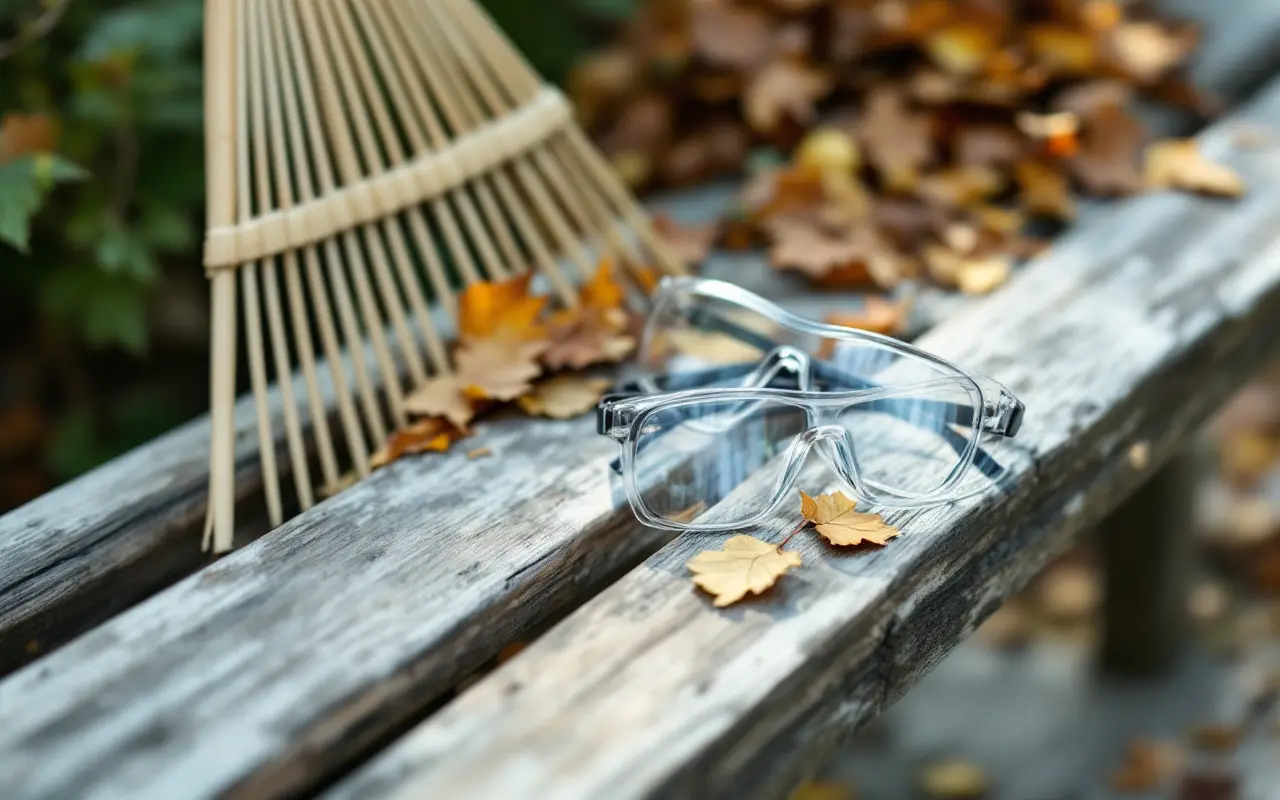
Yes, wear safety glasses for yard work, and don't count on your everyday glasses or sunglasses to do the same job. Mowers, string trimmers and leaf blowers throw stones, grit and twigs at speed, and pruning puts branches right beside your face. Choose a pair with a Z87 marking on both the frame and the lenses (Z87+ means it is rated for high impact) and wraparound lenses or side shields. Switch to sealed goggles when you spray chemicals, mix cement, or sand and drill overhead.
Late October is when I finally face our small garden: the summer's growth along the fence, leaves in the gutters, and a drill that comes out for every job put off since spring. My child wants to help with all of it, which is why two sizes of safety glasses now hang by our back door.
Shop links on this page are affiliate links. As an Amazon Associate I earn from qualifying purchases.
| Item | Who it suits | One note |
|---|---|---|
 Clear safety glasses that fit over prescription glassesLook at it on Amazon | Who it suitsGlasses wearers doing DIY, yard work or cleaning | NoteCheck your frame width against the stated fit |
 Clear anti-fog safety glasses (ANSI Z87.1)Look at it on Amazon | Who it suitsAnyone without prescription glasses on | NoteLook for Z87 on frame and lens |
 Anti-fog safety goggles that fit over glassesLook at it on Amazon | Who it suitsDust, sanding and splashes, over your glasses | NoteGoggles seal where glasses can't |
Chosen from published specifications and reviews; we don’t test products ourselves. The whole eye care tray
How eyes get hurt in the yard and around the house
Eye safety groups such as Prevent Blindness and the American Academy of Ophthalmology point out that a large share of eye injuries happen at home rather than at work, and that many could have been prevented with proper eyewear. At work, safety glasses are often a rule. At home it's a quick job, and the glasses stay in the drawer.
The usual sources in a yard or garage:
- Mowers pick up stones, sticks and bits of forgotten toys hidden in the grass and fling them out from under the deck or the side chute.
- String trimmers spin fast enough to throw gravel, wood chips and broken pieces of line at the person holding them and at anyone nearby.
- Leaf blowers lift dust, sand and grit to face height, and a gust can bring it straight back at you.
- Hedge trimming and pruning keep twigs at eye level. A branch you push aside can spring back, and clippings fall into eyes that are looking up.
- Drilling, sanding and hammering send out chips, plaster dust and metal fragments, and drilling into a ceiling drops them straight down.
- Garden and household chemicals splash or drift on the wind: weed killer, fertilizer dust, pool chemicals, lime, cement, and the cleaning sprays used on patios, grills and outdoor furniture.
- Bungee cords that slip while you strap down a load of yard waste can snap back toward the face.
The person holding the tool is not the only one at risk. A stone thrown by a trimmer travels a long way, so children, pets and neighbors need to stay well back; your tool's manual gives the distance its maker recommends.
Eye care tray
 Child-size safety glasses (ANSI Z87.1)Eye protection sized for children helping with chores, crafts or science projectsLook at it on Amazon
 Anti-fog swim gogglesKeeps pool water and chlorine out of the eyes; never swim in contact lensesLook at it on Amazon
Shop links on this page are affiliate links. As an Amazon Associate I earn from qualifying purchases. More in the tray
What the ANSI Z87.1 marking means
In the United States, safety eyewear is made to a standard called ANSI/ISEA Z87.1. What matters to you is the small marking molded or printed on the frame and on the lenses:
- "Z87" means the eyewear meets the standard's basic impact rating.
- "Z87+" means it carries the high-impact rating, the one to look for when a mower or trimmer might throw a stone.
Check both parts. A frame can carry the mark while the lenses don't, and some fashion or novelty glasses are styled to look like safety eyewear without being rated at all. Other regions have their own standards, such as EN166 in Europe, so a pair bought elsewhere may show a different mark. Goggles sold for chemical splash or fine dust usually say so in their instructions, and some carry an extra marking for it.
Everyday glasses are not made to these standards. A hard hit can crack a lens or snap a frame, and the open sides leave room for grit to slip in. Sunglasses have the same gaps, and their tint darkens the shady corners of a yard just when you need to spot a hidden stone. They have their place on a bright day (see summer sun and your eyes), but they are not safety glasses unless they carry the marking.
Glasses, goggles or a face shield: matching eyewear to the job
Different jobs call for different shapes.
Safety glasses
Wraparound safety glasses, or styles with side shields, suit most yard work: mowing, raking, trimming, pruning, drilling and hammering. They are light enough to wear all afternoon, and clear lenses don't darken the view. Tinted safety lenses help in strong sun but are a poor choice at dusk or in a dim garage.
Goggles
Goggles seal against the face all the way around. They are the better choice when the danger is liquid or fine dust that would drift in around the edges of glasses: mixing cement or mortar, spreading lime, spraying weed killer or strong cleaners, sanding drywall, drilling into a ceiling, or running a blower on a dry, dusty day. If chemicals are involved, choose goggles sold for splash protection.
Face shields
Grinding, cutting metal and chainsaw work may call for a face shield or a mesh visor as well. Safety guidance treats a shield as an extra layer worn over safety glasses or goggles, never as eye protection on its own, because debris can still get in underneath.
Safety glasses over glasses, or prescription safety glasses
You have two good options. Over-the-glasses safety eyewear is sized to fit over your own frames. Prescription safety glasses, made with rated frames and impact-resistant lenses, are ordered through an optician or eye doctor; they need a current prescription and take a little time to make, but they suit people who do a lot of DIY.
Contact lens wearers still need safety eyewear on top, since lenses give no protection, and dust trapped under a lens can scratch the eye. Contact lens care covers the daily habits that keep lenses trouble-free.
Common mistakes
- Pushing the glasses up onto your head "just for a second" while someone nearby is still trimming.
- Taking them off when they fog. Anti-fog lenses help, and so does a short pause in the shade while they clear.
- Keeping a pair with scratched or pitted lenses that blur your view.
- Wearing them loose. They should sit close to the face without pinching and stay put when you look down at the ground.
When children help
Children love yard work in short bursts: carrying leaves, sweeping the path, holding the bag open. Adult safety glasses slide off a small face and leave big gaps, so if your child will be anywhere near flying debris or splashes, get child-size safety glasses with an impact marking of their own. In our house the rule is simple: if the grown-up has safety glasses on, so does the helper.
Crafts and science projects count too. Kits that fizz or splash, a hammer and nails, or snipping wire and stiff plastic all send things toward faces at table height, and a pair that actually fits gets worn.
Some jobs are not for children at all. Keep them indoors or well away while any mower, trimmer or blower is running, never carry a child as a passenger on a ride-on mower, and switch the engine off before a child comes close. Before mowing, walk the lawn together to pick up sticks, stones and toys. It turns a safety step into a small job they can be proud of.
Protecting a child's eyes is separate from checking how well they see. If your child says everything looks blurry through clean safety glasses, the problem may be their eyes rather than the lenses. The printable eye chart makes a fun game of comparing each eye at home, but it is only a rough check, and a difference between the two eyes is a reason to book an eye exam.
What helps keep eyes safe during yard work and DIY
Most of the protection comes from a few habits plus one or two pairs of eyewear kept where you will actually reach for them.
| Option | Who it suits |
|---|---|
| Clearing stones, sticks, toys and hoses off the lawn first | Anyone about to mow, trim or blow leaves |
| Clear wraparound safety glasses with an ANSI Z87.1 markingAmazon | Adults raking, mowing, pruning, drilling or using cleaning sprays |
| Child-size safety glassesAmazon | Children helping with chores, crafts or science projects |
| Sealed goggles sold for splash or dust | Anyone mixing cement, spraying chemicals, sanding or drilling overhead |
| Over-the-glasses safety eyewear, or prescription safety glasses from an optician | People who wear glasses for distance or reading |
| Keeping others back while power tools run | Families with children, pets or neighbors close by |
| An eye exam when small parts or labels look blurry | Anyone who squints at screws and fine print, and children who struggle to see |
When you compare pairs, look first for the marking on both the frame and the lenses, and for "Z87+" if you will be near a mower, trimmer or drill. Side coverage matters as much as the lens, so wraparound lenses or side shields come next. Anti-fog lenses help on a warm afternoon or a cold, damp morning. Clear lenses are the sensible default; keep tint for bright, open work. Avoid toy or costume glasses for real jobs, and any pair that pinches, because uncomfortable eyewear ends up perched on someone's head. For children, a pack of several pairs means one can live in the garage and one in the craft box.
If something gets in an eye
What you do in the first minutes matters. Eye emergencies and first aid covers this in more detail.
Chemicals
Don't rub. Get the eye under gently running clean water straight away and keep rinsing for at least 15 minutes by the clock, holding the lids open so the water reaches the whole eye. A kitchen faucet on low, a shower, or a garden hose turned down to a gentle trickle all work. Use plain water only. Take out a contact lens if it comes out easily, and keep rinsing if it doesn't. Then get urgent care, and take the product or a photo of its label. Lime, cement and many drain and oven cleaners are alkaline and especially dangerous, even after the stinging fades.
Dust and grit
Blink a few times and let tears do their work, then rinse with clean water. Don't rub, and don't dig with a cotton swab or tweezers. If the eye still feels gritty after rinsing, keeps watering, or hurts in bright light, see an eye doctor today.
Fragments and objects
If anything flew into the eye from a trimmer, mower, grinder, drill or hammer, see an eye doctor today even if it feels like a speck of dust: a tiny fast fragment can pierce the eye and leave little to see. If something is stuck in the eye, leave it where it is, don't press on the eye, cover it loosely with a shield (a paper cup taped to the face around the eye works), and go to emergency care.
A blow to the eye
Hold a cold pack wrapped in a clean cloth gently against the cheek and brow, never pressed onto the eye. Blurred or double vision, pain when moving the eye, sensitivity to light, or blood in the colored part of the eye mean seeing an eye doctor today, even if the outside looks fine.
When it is an emergency
A chemical in the eye (after rinsing), anything stuck in the eye, a hard blow after which the eye won't open or can barely see, or a sudden loss of vision all mean emergency care now. Call your local emergency number (such as 911, 999, 112, or 119 in Japan) if you can't get there safely, and don't drive yourself with an injured eye. Yard jobs tend to happen on weekends, when many clinics are closed, so it helps to read eye trouble on holidays and long weekends and finding an eye doctor before you need them.
Questions people ask
Are sunglasses enough for mowing the lawn?
Not usually. Unless they carry a Z87 marking, sunglasses are not made to stand up to a thrown stone, and they leave gaps at the sides. If you want tint on a bright day, look for tinted safety glasses that carry the marking.
Do I need eye protection with a leaf blower?
Yes. A blower moves dust and grit at face height, and gusts blow it back toward you. Safety glasses suit most leaf clearing; goggles are better on a very dry, dusty day or when you blow out a garage.
Can safety glasses go over my regular glasses?
Some can. Over-the-glasses styles are made for it, while ordinary safety glasses balanced on top of your frames tend to slip and leave gaps. If you do a lot of DIY, ask an optician about prescription safety glasses.
When should safety glasses be replaced?
Replace them when the lenses are scratched or pitted enough to blur your view, when the frame is cracked or loose, or after they take a hard hit. A pair that no longer fits snugly should go too.