When night driving gets harder: aging eyes and what to check
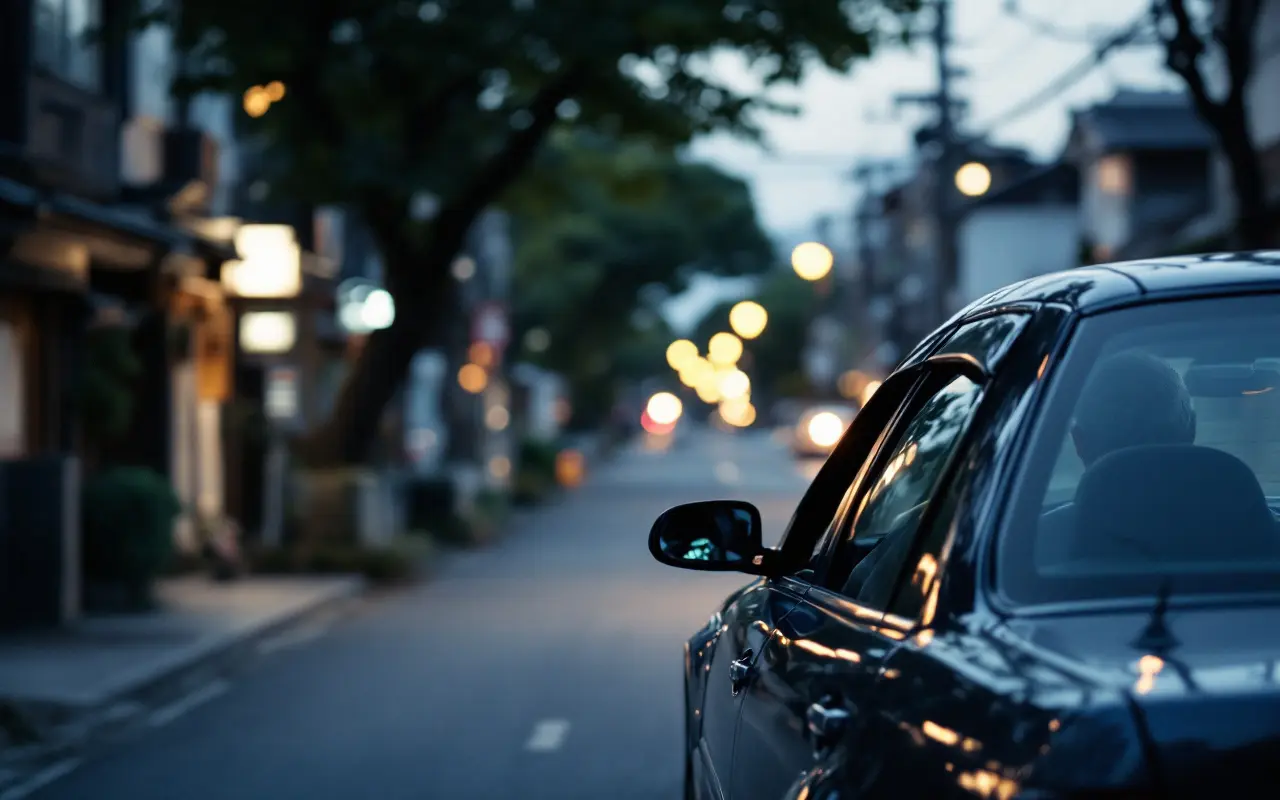
By the middle of November the streetlights in Kyoto come on before five o'clock. Coming home from work or the shops, you spend far more of the drive in the dark than you did in summer.
When I was a reporter on a local paper, I often drove home late from assignments and never gave oncoming headlights a second thought. Somewhere along the way they began to seem strangely bright. People my age who still drive tell me much the same.
Trouble seeing the road at night can come from the ordinary changes of aging, from an eye condition that can be treated, or from both, and you can't tell which on your own. Here is what drivers notice, what lies behind it, and what to ask an eye doctor.
Does any of this sound familiar?
See which of these apply to you.
- Oncoming headlights dazzle you, and the road stays hard to see for a while after they pass.
- Traffic lights and streetlights look smeared, or rays seem to spread out from them.
- You noticed a pedestrian in dark clothes, or a cyclist without lights, later than you should have.
- Going into a tunnel or onto an unlit road, your eyes take a long time to adjust.
- On rainy nights, lane markings, curbs and the edge of the road are hard to make out.
- You can't read road signs until you are quite close.
- Without really deciding to, you have started avoiding driving after dark.
Ticking a few of these doesn't tell you the cause, but the last one deserves attention: if you have been quietly avoiding night driving, part of you may already have noticed that you see less well. Take it as a reason to have your eyes examined.
Prescription glasses, ordered online
An online shop for frames with lenses made to your prescription. You need a current prescription from an eye exam and your pupillary distance (PD).
Visit FytooSome links on this page are affiliate links: if you buy after clicking one, the retailer may pay us a commission. More in the tray
Less light reaches the eye as we age
The pupil, the dark opening at the center of the eye, works like a camera's aperture, narrowing in bright light and widening in the dark to let more light reach the retina.
With age the pupil tends to get smaller and no longer opens as wide in the dark, so on the same road at night, less light actually reaches the retina. The lens inside the eye also gradually loses some of its clarity. The time the eyes take to adjust to darkness, and to recover after a burst of bright light, tends to lengthen too, which is part of why the road can stay dim for a few seconds after an oncoming car goes by.
Dusk is often the hardest time: the light changes minute by minute, your eyes have not yet adjusted, and people and bicycles blend into the background. Turning your headlights on early helps you see and be seen.
These changes happen to most people, to different degrees. But some of what we put down to age turns out to be an eye condition that can be treated.
Glare and gaps in vision: cataract and glaucoma
Night glare often points first to cataract. When the lens clouds, it scatters incoming light, so headlights and streetlights look smeared or seem to wear a ring. Some people manage fine in daylight and first notice the problem on night drives. Getting new glasses and still not finding the view sharp is another hint.
A cataract diagnosis does not mean surgery right away. Your eye doctor will weigh how much it affects daily life, and trouble driving at night is exactly the kind of thing to mention. The column on when to consider cataract surgery covers timing and preparation.
Glaucoma also matters a great deal for driving. In glaucoma the optic nerve is slowly damaged and parts of the field of vision are lost. The other eye and the brain fill in the gaps, so many people don't notice until it is quite advanced. The Tajimi Study in Japan found glaucoma in about 5 percent of people over 40, and about 9 in 10 of them had not been diagnosed.
When you drive, you take in far more than the road straight ahead: a bicycle coming out of a side street, someone stepping off the curb. Gaps in your field of vision can mean noticing these things too late, especially at night. The column on glaucoma and eye exams from 40 explains the tests.
Some retinal conditions also make it especially hard to see in the dark. If your vision at night has become far worse than in daylight, don't put it down to age; ask an eye doctor.
Driving vision rules, and your glasses
Rules on eyesight for driving differ from country to country, and sometimes between states or regions. Most set a minimum standard for sharpness of vision, usually allowing glasses or contact lenses, and some also set a minimum field of vision. If you need glasses or contacts to meet the standard, you are generally required to wear them whenever you drive. Check the current rules with your local licensing authority, and ask your eye doctor if you meet them. Standards are written as 20/40 in the US, 6/12 in many other countries or 0.5 in decimal notation, all the same line; a visual acuity converter shows how the notations match.
Passing a licensing eye test does not mean your night vision is fine. A standard test measures how small a letter you can make out, straight ahead, in good light. It says little about seeing in the dark, glare, or gaps toward the edges of your vision.
As for your glasses, ask yourself:
- How long since your prescription was last checked? Vision changes with age.
- Are the lenses scratched or smudged? Both scatter light and make night glare worse.
- If you drive in progressive lenses, are you looking at the road through the distance part?
- Are you wearing sunglasses or tinted lenses after dark? They cut the light reaching your eyes even further.
Progressive lenses take some getting used to; the column on reading glasses and progressive lenses has tips. Before changing your prescription, have an eye doctor check for eye disease. If a condition is the cause, new glasses won't fix it.
On the car side, a film on the inside of the windshield spreads the glare of oncoming lights, so clean the glass regularly and replace worn wiper blades. On a long drive you also blink less, and heater air blowing on your face dries the eyes further, so stop now and then and rest your eyes closed for a few minutes.
What to tell the eye doctor, and what to ask
Rather than just saying "I can't see well at night," describe specific situations. Jot these down before you go:
- When it is hard to see (oncoming headlights, rainy nights, dark intersections)
- When you first noticed, and whether it came on gradually or suddenly
- Whether there is a difference between your eyes when you cover one at a time
- The glasses you wear now, and your driving glasses if you have a separate pair
- Any health conditions, and a list of your medicines
- How often you drive, and at what times of day
In the exam room, ask plainly: "Is it all right for me to keep driving at night? What should I watch out for?" The answer depends on your eyes, and the judgment is the doctor's.
Besides checking vision and eye pressure, the eye doctor may examine the back of the eye or test your field of vision. Drops that widen the pupils leave light dazzling for several hours, and you will be told not to drive, so arrange a ride with family or take a bus or taxi that day.
Separately from night driving, some symptoms need an eye doctor that same day, and if none is open, an emergency department. Don't drive yourself there.
- Sudden loss of vision, a missing area of vision, or a curtain or shadow across it
- Flashes of light, or a sudden shower of dark spots or threads (floaters)
- Sudden severe eye pain with blurred vision, headache or nausea
- Double vision that starts suddenly
Sudden double vision can come from the brain or nerves rather than the eye. If it comes with slurred speech, weakness in an arm or leg, or a drooping face, or if the sight in one eye vanishes even for a few minutes, call your local emergency number straight away (such as 911, 999, 112, or 119 in Japan).
Choosing to drive less at night
One option, after the tests and the doctor's advice, is to drive less after dark. Long before any question of giving up driving, simply changing when you drive helps many people.
- Do the shopping and medical appointments in daylight where you can.
- In the short days of winter, move evening errands to the morning.
- Avoid driving at night in rain or on unfamiliar roads.
- For evening gatherings, ask family for a ride or use a bus or taxi.
- When you must drive at night, stick to roads you know and leave plenty of time.
In central Kyoto, with buses and trains, cutting back on night driving is one thing; in the mountain villages to the north, where the doctor and the shops are out of reach without a car, it is quite another. Where a car is essential, work out with family and neighbors how to fit errands into daylight, or share rides to evening events.
Some people give up night driving for the dark winter months and think again when the days lengthen. Rather than treating it as a choice between keep driving and stop, you can choose when and where to drive according to your eyes, and decide with your eye doctor, since treatment can also change how well you see.
When the family raises it
Bringing up a parent's or spouse's night driving is hard. Say "you're getting too old for this" and the other person tends to dig in, because driving is bound up with decades of confidence and the freedom to go where you please.
It usually goes better to start with specific moments rather than age. "That rainy night, it took you four tries to get into the garage." "You said the headlights were bothering you. Why not have your eyes checked?" Say you are worried rather than finding fault, offer to go to the eye doctor together, and don't push for a decision.
If a family member comes to the appointment, you hear the explanation together. Some people accept advice about night driving more easily from a doctor than from their children, and if all is well, the family can relax.
A word for drivers as well: if you have had a close call at night, don't keep it to yourself. It is natural to stay quiet for fear of being told to stop, but speaking up early lets everyone plan appointments and rides calmly.
The decision to keep driving at night, cut back or stop belongs to the driver. Family can help gather the facts and, if night driving is reduced, help with rides and shopping. Giving up a license altogether is a bigger conversation for another day. Start by finding out how the eyes are doing.
A close call on a dark road is a message from your eyes. Don't write it off as age. Have them checked.