Eyes in Later Life · Everyday Eye Care
Choosing the best light for reading as your eyes get older
The best light for reading is one you can aim at the page, adjust to your eyes, and keep out of your line of sight. For most readers over 50 that means a lamp close to the book with a shade that hides the bulb, light that stays steady when dimmed, and a color you can change: warmer for an evening novel, cooler and brighter for fine print or sewing. Keep a room light on too, so the page is not the only bright thing in view.
No single lamp suits everyone, so this guide compares the options rather than naming one. I spent my working life at a local newspaper, reading copy late under tired office lights, and in my sixties I notice every dim corner of the house. Here is how I would choose, and when an eye exam is a better use of the money than any lamp.
Why older eyes ask for more light
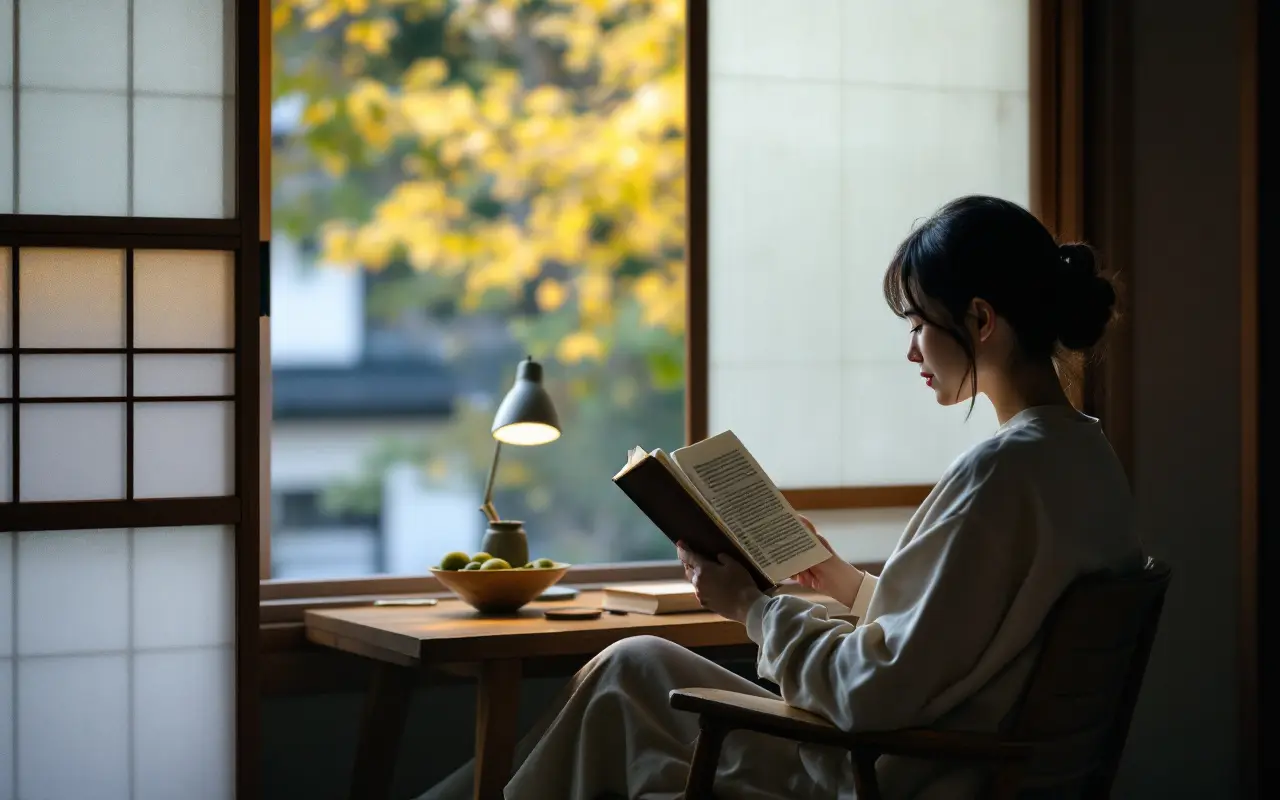
With age the pupil gets smaller, and the lens inside the eye yellows a little and scatters more of the light that gets through. A page that looked fine at 40 can look gray at 65, and a lamp that once seemed pleasant can start to glare. Bright light also narrows the pupil, which keeps near things in sharper focus. That is partly why the morning paper by a sunny window reads more easily than the same paper after dark. By early November in Kyoto the light at my window seat is gone by late afternoon, and my reading moves to the lamp until spring.
So a reading light has two jobs that pull against each other: more light on the page, less in your eyes. The guide to magnifiers and lighting for small print covers magnifiers and phone settings; this piece stays with the light itself.
What to look for in a reading lamp
A head you can aim
Choose a lamp whose head or arm tilts and turns, so the light reaches the page from the side rather than your face. The shade matters as much as the bulb. You want an evenly lit page, not a hot spot with dim edges, and you should not see the bright part of the lamp from your chair. Small, uncovered LEDs in view will tire your eyes faster than a dimmer lamp with a good shade.
Brightness you can turn up and down
A dimmer earns its place more than any other feature. Your eyes in the morning are not your eyes at bedtime, glossy paper needs less light than newsprint, and two people sharing a lamp rarely want the same setting. Turn the light up until the letters look dark and crisp, then back off a step if the white of the page begins to glare.
The light should also be steady. Some LED lamps flicker at low settings, which some people notice as strain or a faint shimmer on the page. If a lamp shimmers or buzzes when dimmed, try another.
Warm or cool, in plain words
Many LED lamps let you choose the color of the light, from a warm, yellowish glow like an old household bulb to a cooler, whiter light closer to daylight. Neither is better for the eyes in general. Warmer light feels softer, and many people prefer it for an evening novel and the hour before sleep. Cooler, brighter light sharpens edges and contrast, which helps with fine print, puzzles, maps and dark thread on dark cloth. Try each setting on the same page and keep the one you stop noticing.
Controls and cords
Pick a switch you can find by touch in the dark, a heavy base or table clamp that keeps a long arm from tipping, and a cord that stays out of the path to the door, where it is a fall waiting to happen.
Where to put the light
In an armchair
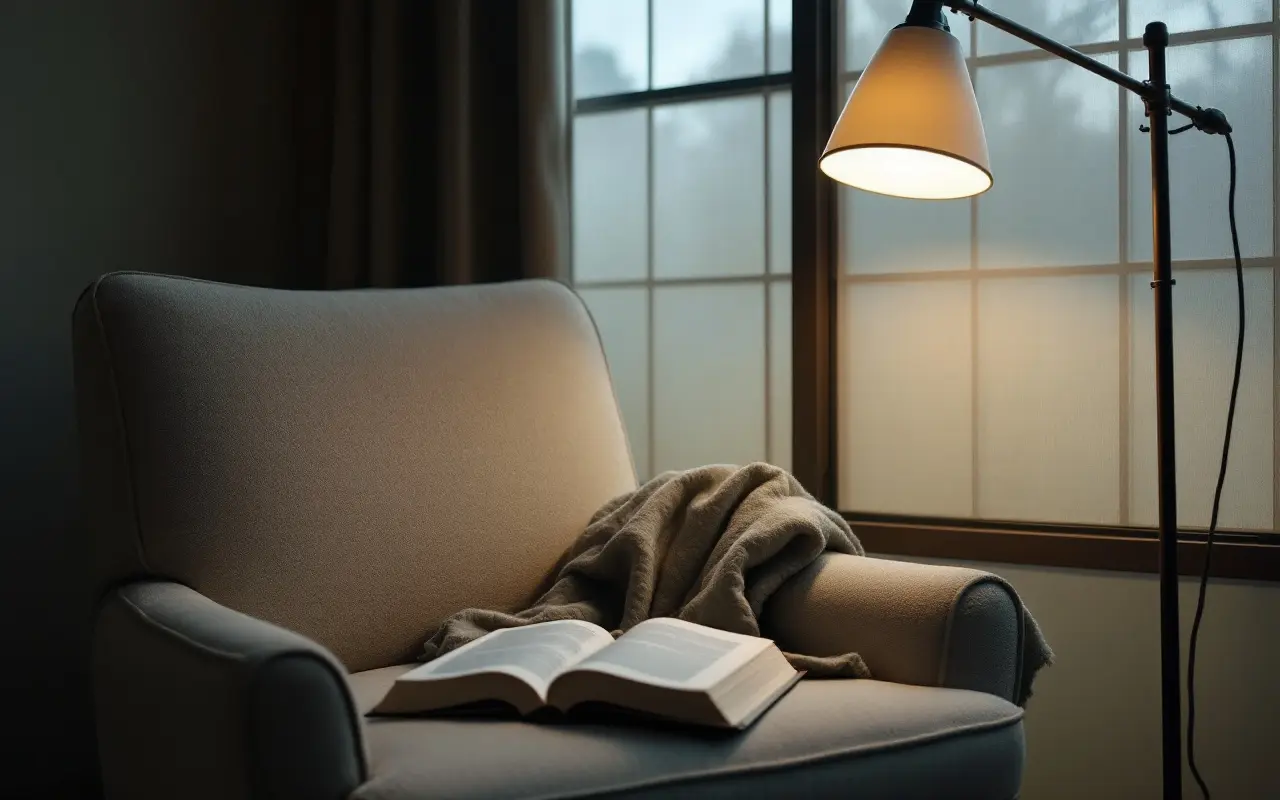
A floor lamp works well beside the chair and a little behind it, so the light comes over your shoulder and down onto the book, with the shade low enough that you cannot see the bulb. A ceiling light behind or above you tends to throw the shadow of your own head onto the page, which is why a chair under a bright fitting can still feel dim.
At a table or desk
For writing, letters or crosswords, put a desk lamp on the side opposite your writing hand, so a right-handed person puts it on the left. Keep the head below eye level and angle it down onto the page.
Glossy pages and screens
Light bounces off a glossy surface at the same angle it arrived. A lamp in front of you and above the page sends the shine straight into your eyes; moved to the side or a little behind you, it sends the shine away. Magazines, photo books and phone or tablet screens all behave this way, so if a bright patch sits over the words, move the lamp before you move the page.
Keep the room lit as well, or your eyes have to readjust every time you look up. The piece on autumn reading and tired eyes explains how to balance a room light with a lamp.
Lamp, book light, magnifier or room light
Each of these does a different job, and none does all four well.
- A desk or floor lamp is the main light for long reading: an evenly lit page, brightness you can set, and often a choice of color. It stays where you put it and usually needs a socket.
- A clip-on book light aims a narrow beam at the page. It suits reading in bed beside a sleeping partner, travel, or a chair with no socket nearby. It lights the words but not the room, so keep a low light on elsewhere if you can, and watch the angle on glossy paper.
- A lighted magnifier is for short spells of very small print: a medicine leaflet, a map, footnotes. It shows only a few lines at a time, so it is tiring for a whole chapter. Needing it for ordinary print is a reason to see an eye doctor.
- The ceiling light is not a reading light on its own, but you still need it, to keep the difference between page and room gentle and to light the way when you get up.
Screens, e-readers and reading in bed
A phone or tablet makes its own light, so the lamp's job is to light the room around it, from a spot where it does not show in the glass. A front-lit e-reader is much the same; one without a light needs a lamp, like a book. On any screen, bigger text costs nothing and often helps more than extra light. Turn the text size up a step or two, try bold text, and match the screen brightness to the room. The magnifier guide goes through the settings.
In bed, lying flat with the book held overhead puts the page in your own shadow and lets it drift toward your face. Sit up against pillows, rest the book on a cushion, and put the light beside you and slightly behind your shoulder: a bedside lamp with a low shade, a swing-arm wall lamp, or a book light if your partner is asleep. Near sleep, a warmer, dimmer setting is more restful. Older eyes also take longer to adjust to the dark after a lamp goes off, so a small night light on the way to the bathroom is a sensible companion.
What helps at the reading chair, the desk and the bed
Start with the free changes, then add the one or two items that fit where you read. If your near vision has changed quickly, the exam comes first.
| Option | Who it suits |
|---|---|
| An eye exam before buying anything | Anyone whose near vision changed quickly or in one eye, or who sees new waviness in lines of print |
| Moving the lamp you own and keeping the room lights on | Everyone, and the first thing to try |
| Readers in the right strength, with spare pairs by the bed and the chair | People whose eye exam showed well-matched eyes and who know their strength |
| A dimmable LED desk lamp | Reading, writing, puzzles or sewing at a table, where you want to set brightness and color |
| A rechargeable clip-on book light | Reading in bed beside a sleeping partner, on trips, or in a chair far from a socket |
| A large lighted hand magnifier | Short spells of very small print: labels, maps, footnotes, the TV guide |
| Bigger text on a phone, tablet or e-reader | Anyone who reads news or books on a screen |
To choose, picture the place you read most. For most people the main purchase is a lamp for that table or chair, ideally one with several brightness levels, a choice of color modes and a diffused shade. A book light is the second light, for bed and travel; a rechargeable one that clips to a book, with a bendable neck and a dimmer, covers most needs. Keep a hand magnifier with its own light for print that defeats both. Readers in the right strength make every light go further. Ready-made readers have one strength per pair, so find yours first from your last eye exam and the reading glasses strength tool. Avoid lamps whose bright part shows from your chair, lights that shimmer when dimmed, and a book light as the only light in a dark room.
When better light is not enough
A good lamp makes reading comfortable for healthy eyes. It cannot fix the reason print got hard to see, and needing ever more light is worth mentioning to an eye doctor.
- Turning the lamp up every few months, new glare or halos from lamps and headlights, faded colors or a hazy page can mean a cataract. The column on cataract surgery timing explains how that decision is usually made.
- Wavy or bent lines, or a blurred or dark patch over the word you are reading, can mean age-related macular degeneration (AMD). Brighter light often helps people with AMD read, but new distortion needs an eye exam first, not a new lamp. The Amsler grid is a self-check for changes, not a diagnosis.
- Glaucoma and diabetic eye disease can go years without symptoms, so keep up regular exams even when a good lamp seems to solve everything.
If your near vision changed quickly, or one eye seems worse than the other, see an optometrist or ophthalmologist before you buy anything. Finding an eye doctor and planning a visit explains how. The American Academy of Ophthalmology recommends a baseline comprehensive eye exam at 40 for adults without symptoms or risk factors, and earlier for people with diabetes, high blood pressure or a family history of eye disease.
Get eye care the same day for new flashes of light, a sudden shower of floaters, a shadow or curtain across part of your vision, or lines that suddenly look distorted. Go to an emergency department, or call your local emergency number (such as 911, 999, 112, or 119 in Japan), for sudden loss of vision in one eye, even if it comes back within minutes, because it can be a warning sign of stroke. The same goes for sudden severe eye pain with blurred vision, halos around lights, headache and nausea. Eye emergencies and first aid explains what to do while you get help.
If an eye condition means good light, the right glasses and a magnifier are still not enough, ask your eye doctor about low vision services. They look at the lighting where you read, suggest lamps, magnifiers and contrast changes, and usually let you try things before you buy. The guide to low vision support explains what they offer.
Questions people ask
Is warm or cool light better for reading?
Neither is better for the eyes in general. Cooler, brighter light suits small print and close tasks, while warmer light suits relaxed reading in the evening. A lamp with color settings lets you change with the task and the hour.
Can reading in dim light damage your eyes?
No. Poor light can leave your eyes tired and achy, and you may find yourself squinting and holding the book closer, but it does not cause lasting harm. If reading tires you in light that used to be enough, have your eyes checked.
How bright should a reading lamp be?
Bright enough that the print looks dark and crisp, and not so bright that the white of the page glares. Older eyes usually need much more light than younger ones, so a lamp that suited you years ago may now be too dim. A dimmer lets you find the point that suits your eyes.
Sources
- American Academy of Ophthalmology patient information (aao.org/eye-health)
- National Eye Institute (nei.nih.gov)