Eyes in Later Life · Vision, Glasses & Contacts
Magnifying glass with light for reading, and what else helps
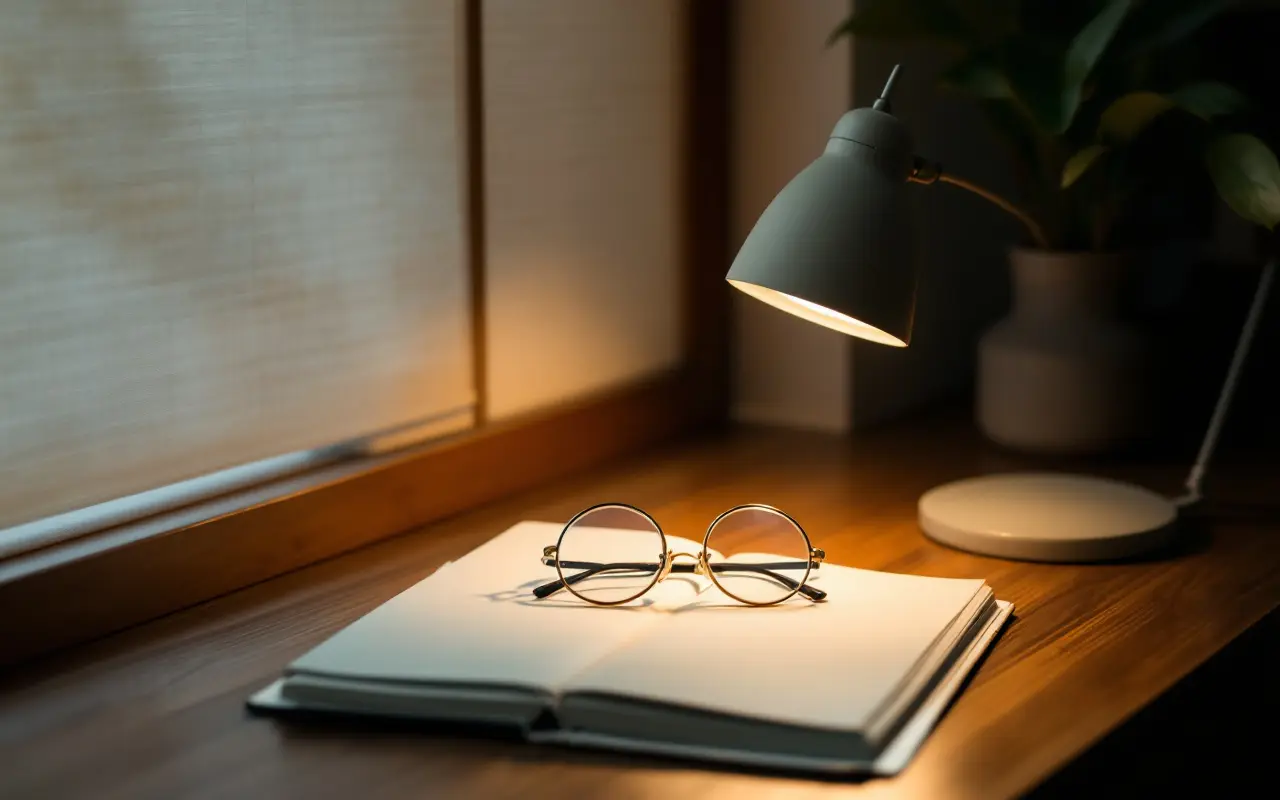
A magnifying glass with a built-in light is one of the simplest ways to read small print again. The lens makes the letters larger, and the light makes them darker and sharper against the page, which older eyes need more than most people expect. For short jobs such as medicine labels, bills and the dial on the oven, a lighted hand magnifier is often simpler than reaching for a stronger pair of reading glasses.
It works best as one part of a set, though: an eye exam first, then good light in the right place, readers of the right strength, the magnifier, and the text settings on the phone you already own. I am in my sixties and spent my working years around newsprint, so I have watched small type get harder to read, for myself and for nearly everyone I know. Here is the order I would take things in.
First, find out why the print looks smaller
For most people over 40, small print gets harder because of presbyopia: the lens inside the eye stiffens and can no longer focus as close as it did. That is normal aging, and the column on reading glasses and progressives explains it, along with the glasses that help.
Other causes become more common with age, and a magnifier cannot put them right.
- A cataract, the slow clouding of the eye's lens, brings haze, glare, faded colors and glasses that never seem quite right. The column on cataract surgery timing explains how that decision is usually made.
- Age-related macular degeneration (AMD) affects the center of your vision. Lines of print can look wavy, or a blurred or dark patch can sit over the very word you are reading. The column on AMD and the Amsler grid shows a simple home check.
- Diabetic eye disease and glaucoma can be present for years with no symptoms at all.
A magnifier makes the letters larger. It does nothing about the reason they became hard to see. So before you rely on one, have a full eye exam with an optometrist or ophthalmologist, especially if the change came on quickly, if one eye seems worse, or if your glasses are recent and already not enough. Finding an eye doctor and planning a visit is a good place to start. The near-vision card on the printable eye chart page lets you note the smallest print each eye can read, with the date, to compare against later and to show whoever examines you.
Light comes before lenses
As we get older, the pupil gets smaller and lets in less light, and the lens inside the eye turns slightly yellow and scatters more of the light that does get through. So older eyes need much more light than younger ones for the same page, and they are also more bothered by glare. The aim is more light on the page and less light in your eyes.
A ceiling light alone rarely manages that, since your own head throws a shadow onto the book in your lap. A lamp close to the page does far better.
- Put the lamp to one side of you and slightly in front, with the shade low enough that you cannot see the bulb. Below eye level is the rule of thumb.
- Bring it closer than feels natural. Halving the distance between lamp and page gives the page roughly four times as much light.
- If you write by hand, put the lamp on the side away from your writing hand, so your hand does not shade the line.
- Leave the room lights on too. A bright page in a dark room is tiring.
- Watch for shine. Magazines and the glossy leaflets that come with medicines reflect light straight back at you. Tilt the page or move the lamp until the shine slides off the words.
A chair by a window, with daylight coming over your shoulder rather than into your face, can make the morning paper easier than the evening one. The color of the light is a matter of comfort: some people find a cooler, whiter light crisp, others find it harsh and prefer something warmer.
Reading glasses and magnifiers
Readers in the right strength
If an eye exam has shown your two eyes are well matched, ready-made readers can do well, and the reading glasses strength tool gives a typical starting strength from your age and reading distance. Choose the weakest pair that keeps ordinary print clear; a pair that is too strong pulls the page in close and leaves only a narrow band in focus. Once you know your strength, spare pairs in the kitchen, by the bed and in your bag keep the magnifier for the small jobs. Readers are for close work only, so never walk around or drive in them.
Magnification against field of view
Every magnifier makes the same trade. The stronger it is, the larger the letters, but the fewer of them you see at once, and the closer to the page the lens has to be held. A gentle magnifier shows a few lines; a strong one may show a few letters. Large lenses also tend to be lower in power, and strong lenses tend to be small.
For eyes that are healthy apart from presbyopia, a low power is usually enough and far more comfortable. The strongest magnifier on the shelf often turns out to be a tiring tool that shows half a word. If you need strong magnification to read ordinary print, take that as a reason to see an eye doctor rather than as a shopping question.
Hand or pocket
A large hand magnifier with its own light suits the jobs around the house: a bill, the cooking time on a package, the setting on a thermostat. A pocket magnifier is smaller and stronger, so it shows less at once, but it goes with you for restaurant menus, price labels and the instructions on a medicine box. Many people end up with one of each. In a pinch, many phones also have a magnifier setting that uses the camera and its light.
Holding a hand magnifier at the right distance
The usual mistake is holding the lens up near the eye like a pair of glasses. Try this instead.
- Lay the page flat in good light, on a table if you can.
- Put the magnifier flat on the page, then lift it slowly toward you. The print will grow and sharpen, then start to blur. Stop where it is largest and clearest. With the same glasses, that working distance stays the same each time.
- Keep the lens at that distance from the page and bring your eye toward the lens, not the lens toward your eye. The closer your eye, the more of the page you see.
- Keep the lens parallel to the page and slide it along the line. Tilting it distorts the letters.
- Rest your elbow on the table. If your hands are not steady or you want to read for a long time, a stand magnifier, which sits on the page at a fixed height, may suit you better.
Whether you wear your reading glasses behind the magnifier changes the distance that works, so try it both ways. If neither feels right, a low vision service can show you how to pair the two.
Bigger text, better contrast
The phone, tablet or e-reader you already own probably has more help built in than any gadget you could buy. Look under display or accessibility settings.
- Turn the text size up a step or two. Bold text helps some people as much as a larger size.
- Try display zoom or larger icons, so buttons are easier to hit as well as to read.
- Switch on dark mode or high contrast if white backgrounds feel glaring.
- On an e-reader, choose a larger font, a bolder typeface and more space between lines, with the front light turned up until the page looks evenly lit.
Change one setting at a time and live with it for a day or two.
Contrast does quiet work on paper. Black ink on white or cream matte paper is easier than gray print on glossy stock, a felt-tip pen leaves a darker line than a ballpoint, and if you print your own recipes or lists, a larger size in a plain typeface helps.
What helps with small print at home
Shop links on this page are affiliate links. As an Amazon Associate I earn from qualifying purchases.
Most people do best with two or three of these together, matched to what they read and where. The exam and the habits cost little and come first.
| Option | Who it suits |
|---|---|
| A full eye exam before buying anything | Anyone whose reading changed quickly, changed in one eye, or got harder despite recent glasses |
| More light, placed to the side and below eye level | Nearly everyone over 50, and anyone reading in a dim chair under a ceiling light |
| A dimmable LED desk lampAmazon | People who read, sew or do puzzles in the same spot each day and want to set the brightness and color |
| Readers in the right strength, with spare pairsAmazon around the house | People whose eye exam showed well-matched eyes and who keep putting their one pair down somewhere |
| A large lighted hand magnifierAmazon | Short jobs at home: labels, dials, bills, the small print on a form |
| A pocket LED magnifierAmazon | Menus, price tags and medicine labels when you are out |
| Larger, bolder text and the camera magnifier on your phone | Anyone who already reads messages, news or books on a phone |
To choose, start with the task, not the tool. If the trouble is mainly in one chair in the evening, a better lamp may be all you need. If it is labels around the house, a lighted hand magnifier kept in the kitchen makes sense; if it is menus and shop shelves, a pocket one. Look for the lowest magnification that lets you read comfortably, a light that spreads evenly rather than making a bright spot, and a lamp shade that hides the bulb. Avoid buying a very strong magnifier or stronger readers on a guess, and avoid bare bulbs and shiny tabletops that bounce glare back at you.
When to stop and see an eye doctor
Book a routine eye exam if you need more light or magnification every few months, if new glasses stop helping after a short while, if glare is making reading hard, or if you are over 40 and have never had a full exam. The American Academy of Ophthalmology recommends a baseline comprehensive eye exam at 40 for adults with no symptoms or risk factors, and earlier for people with diabetes, high blood pressure or a family history of eye disease.
See an eye doctor the same day if:
- your reading vision changes suddenly, especially in one eye
- straight lines look wavy or bent, or a dark or missing patch sits in the center of what you look at
- you notice new flashes of light, a sudden shower of floaters, or a shadow like a curtain over part of your vision
Go to an emergency department, or call your local emergency number (such as 911, 999, 112, or 119 in Japan), for sudden loss of vision in one eye, even if it comes back within minutes, since it can be a warning sign of stroke. The same goes for severe eye pain with blurred vision, halos around lights, headache or nausea. Eye emergencies and first aid explains what to do while you get help.
If your eye condition is being treated and good glasses and a magnifier are still not enough, ask your eye doctor about low vision services. They match magnifiers, lighting and devices to your eyes and the tasks that matter to you, and you can usually try things before deciding. The guide to low vision support explains what they offer.
Questions people ask
What magnification do I need for reading?
Less than most people expect. If your eyes are healthy apart from presbyopia, a low-power magnifier with your usual readers is usually enough for small print. Needing strong magnification for ordinary print is a sign to see an eye doctor.
Can using a magnifier damage my eyes?
No. A magnifier, like reading glasses, does not harm the eyes or make them weaker. Holding it at the wrong distance or reading for a long time can leave your eyes feeling tired, and a rest usually helps.
Should I buy stronger readers instead of a magnifier?
For books and long reading, readers in the right strength are usually more comfortable. A pair stronger than you need pulls the page close and narrows what stays in focus, so for a quick label a magnifier is often easier. If you keep wanting a stronger pair, have your eyes checked.
Sources
- American Academy of Ophthalmology patient information (aao.org/eye-health)