Strabismus in children: when the eyes don't line up
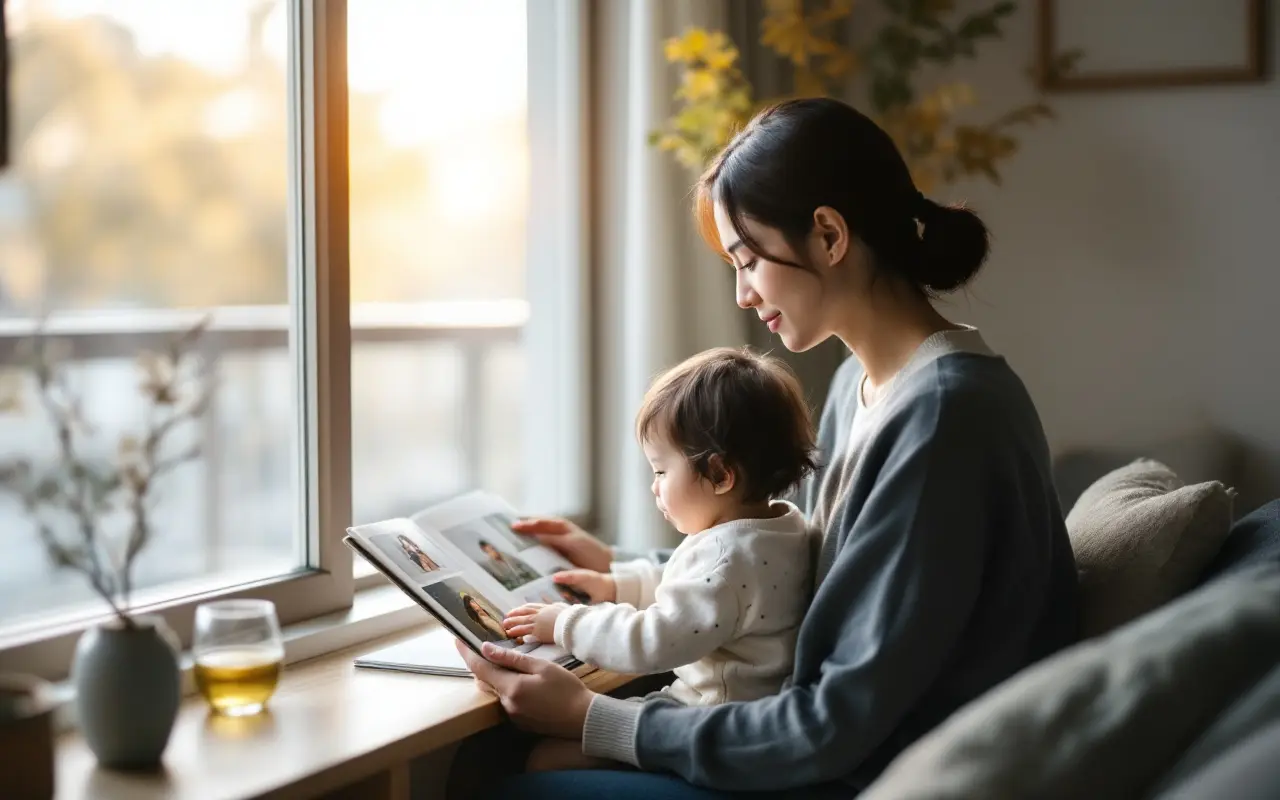
You are scrolling through family photos and stop at one: isn't one eye looking slightly outward? Or your child is half asleep in front of the TV one evening, you glance over, and the two eyes don't seem to be pointing the same way. Many parents first notice an eye turn in small, ordinary moments like these.
When the eyes are not aligned, it is called strabismus. People also say a squint, a turned eye or crossed eyes. You may know the word, but not what kind it might be, whether it is fine to wait, or when to see an eye doctor. As a parent myself, I have set things out in the order the questions tend to come up.
Two eyes that are not looking at the same thing
Normally both eyes look at the same thing. Each sees it from a slightly different angle, and the brain blends the two images into one. That is how we see depth.
In strabismus, one eye points at whatever the child is looking at while the other points somewhere else. It is thought to arise when something is off in the muscles that move the eyes, the nerves that control them, or the brain's system for keeping both eyes working together, but in children a clear cause is often not found. Some types are linked to farsightedness, which I come back to below.
An adult who suddenly develops an eye turn usually sees double and finds it very disturbing. Young children rarely say they see double, because the brain can adapt by ignoring the image from the turned eye. The child may seem perfectly happy, yet the way their vision develops can still be affected. That is the single most important thing to understand about strabismus in children.
The names depend on direction and timing
Strabismus is named by the direction the eye turns and by whether it turns all the time or only some of the time. You don't need to work this out at home, but knowing the words makes the eye doctor's explanation easier to follow.
| Name | Direction of the eye | When families often notice it |
|---|---|---|
| Esotropia | One eye turns in toward the nose | Looking at toys or picture books up close; photos taken straight on |
| Exotropia | One eye turns out toward the ear | Looking into the distance; daydreaming |
| Hypertropia or hypotropia | One eye sits higher or lower than the other | A habit of tilting the head; photos where the eyes look uneven in height |
| Intermittent exotropia | Usually straight, sometimes drifts outward | When tired, sleepy or unwell; outdoors in bright sun |
The two parents hear about most often are esotropia and intermittent exotropia.
An eye that drifts only sometimes
In intermittent exotropia the eyes are lined up most of the time, but one drifts outward when the child is tired or lost in thought. Some families only see it in the evening, or only when their child has a fever. Some children close one eye in bright sunlight.
Because it comes and goes, it is easy to decide you imagined it. A photo or short video of the drift helps a great deal at the eye doctor.
Inward turns linked to farsightedness
Some esotropia in children is linked to significant farsightedness. A farsighted eye has to work hard to focus on things up close. Focusing and turning the eyes inward are linked, so all that focusing effort can pull the eyes in too far. For this type, glasses that correct the farsightedness are often at the center of treatment.
Looks crossed but isn't: pseudostrabismus
Babies and toddlers often look cross-eyed when you face them, even though both eyes are pointing straight ahead. This is called pseudostrabismus, or false strabismus.
Young children have a flat, wide bridge to the nose, and small folds of skin at the inner corners of the eyes cover part of the white on that side. With less white showing near the nose, the eyes look turned in. When the child looks sideways, one eye can seem to disappear into the inner corner. As the face grows and the bridge of the nose develops, the look usually fades.
The difficulty is that pseudostrabismus and true esotropia are hard for families to tell apart, and a child can have both. When someone says "all babies look like that," they are often right, but if the look persists, have an eye doctor check.
Strabismus, lazy eye and seeing in depth
Strabismus is more than a question of looks because it can affect how vision develops.
Children's eyesight develops through seeing clearly every day, and the most important years run until about age 7 or 8. When one eye is turned, the brain may start to ignore its image. If that goes on, the eye's vision may not develop fully. This is amblyopia, often called lazy eye, and it affects about 2 to 3 of every 100 children.
When the eyes are not aligned, the ability to merge the two images and judge depth (binocular vision) may not develop well either.
Amblyopia responds best to treatment started early in childhood. The column on vision checks and amblyopia in young children goes into this in more detail. When you see an eye doctor about an eye turn, amblyopia will be checked at the same visit.
Appearance matters too. Older children can become self-conscious about a turned eye, and if you are worried about how your child feels, tell the eye doctor that as well.
Clues in photos and everyday life
Families are often the first to notice something. Whether it is strabismus is for an eye exam to decide.
The light reflection in photos
Take a flash photo of your child facing the camera and a small white dot of reflected light appears in each eye. If the eyes are aligned, the dots sit in roughly the same place in both. If the dot in one eye sits off toward the edge of the colored part, that eye may be turned.
Hold the camera at your child's eye level, straight in front and a little way back, with their head level. Don't judge from a single photo; take a few on different days and compare.
Flash photos can also reveal something unrelated to strabismus. If one pupil looks white or has a pale glow instead of the usual dark or red reflection, and it shows up in more than one photo, see an eye doctor promptly rather than waiting.
Everyday habits
These can also be clues to an eye turn or a focusing problem:
- watching TV with the head tilted, or the face turned slightly to one side
- closing one eye even when it isn't bright
- one eye drifting outward in the evening or when sleepy
- often reaching slightly off target when grabbing things
- holding books or screens very close
A head tilt can be a child's way of compensating for an eye turn, so a posture you put down to habit may have something to do with the eyes.
What happens at the eye doctor
The eye doctor fits the exam to your child's age, checking vision, alignment, eye movements, the prescription (farsightedness, nearsightedness and astigmatism) and the back of the eye. To check alignment, they may cover one eye at a time and watch whether the other eye moves, often using toys or pictures to hold a young child's attention.
To measure the prescription accurately, drops may be used to relax the eye's focusing for a while. The drops take time to work, and afterward your child may find light glaring and close things blurry for some hours, so allow plenty of time. Some tests may be done by an orthoptist, a specialist trained in eye alignment and eye movement problems.
Treatment depends on the type and size of the turn and whether there is amblyopia. In general terms it may include:
- glasses to correct farsightedness or astigmatism
- if there is amblyopia, treatment to strengthen the weaker eye, such as patching the stronger eye for part of the day
- surgery to adjust the position of the eye muscles
Which of these, when, or whether to keep watching for a while, is for the eye doctor to decide. The word surgery can be frightening, but the first step is only an exam and an explanation of the options. Writing your questions down beforehand makes it easier to ask them in the room. The guide to your first eye exam has more on preparing for an appointment.
Helping at home once treatment starts
Glasses and patching happen at home, day by day. Few toddlers wear glasses happily from the first morning, and peeled-off patches are a common struggle. Small things help, such as starting during a favorite show, or a sticker on the calendar for each good day.
If your child goes to daycare or preschool, tell the staff exactly what the eye doctor said, for example whether the glasses can come off for outdoor play and when the patch should be worn.
If you are finding it hard to keep up, don't cut back or stop on your own. Bring it up at the next appointment. The eye doctor will review the prescription and the treatment as things progress.
When to go, and when to go today
If you are worried about an eye turn, you don't need to wait for the next routine check. Many countries offer vision screening for young children; ask your child's doctor or health visitor what is offered where you live. But a screening is no substitute for an exam once you have noticed something. Book an appointment soon if:
- photos or videos show the eye turn more than once
- a crossed look is still obvious after early infancy
- strabismus or lazy eye runs in the family and you have noticed something
- a screening has flagged eye alignment or vision
Bring the photos or videos, your child's health record book and any screening results. With intermittent types the eyes may look perfectly straight in the exam room, so records from home are more useful than you might expect.
A new eye turn that appears suddenly is a different matter. If your child's eye suddenly turns in or out, or they tell you they are seeing double, see an eye doctor the same day if at all possible. If it comes with headache, vomiting, unsteadiness, a drooping eyelid or weakness in an arm or leg, the cause may lie in the brain rather than the eye. Go to an emergency department or call your local emergency number (such as 911, 999, 112, or 119 in Japan).
The guide to eye checks through life sets out the usual checks by age. Strabismus is a condition where noticing early and getting to an eye doctor can protect a child's sight. Even if you half suspect you are imagining it, take a photo along and ask.