Snow, wind and a long ride: what children's eyes need on a winter mountain trip
Every winter our family takes one trip north from Kyoto into the snow, and every year my daughter spends the first hour with her nose against the bus window, then the second hour complaining that her eyes are tired. By the time we arrive she is squinting at the white hillsides and refusing to wear her sunglasses. From packing mittens to booking a bus from Denver to aspen, a family mountain trip in Colorado asks for the same small bit of planning for children's eyes.
A day in the mountains puts young eyes through a lot: hours of window light and screens on the way, cold dry wind, and snow that throws sunlight back up from the ground. None of it is a reason to stay home. It is just worth packing for. Here is what our trips have taught me, and the signs that mean a sore eye needs a doctor.
The ride: window light, screens and a tired afternoon
A long ride is the first part of the day, and it is where tired eyes often start. Children tend to do one of two things on a bus: stare out of the window for a long time or stare at a screen for a long time. Both have their moments.
Looking out of the window is good for the eyes in a simple way. The view changes distance all the time, near trees and far ridges, so the eyes are not locked on one point. The problem is glare. Winter sun is low, and when it comes through the window on one side of the bus it lands straight on a child's face. A seat on the shaded side, a hat with a brim or simply drawing the curtain for a while can make the ride calmer.
Screens are the other half. Many children feel queasy reading or watching something in a moving vehicle, and they also blink less when they concentrate on a screen, which leaves the eyes feeling dry and heavy. I do not ban them on trips, but I keep them in short stretches.
Our ride routine, which works more often than it fails:
- A screen for one episode, then a break to look out of the window.
- A snack and some water at every break, because a thirsty child is a cranky one, and dry air does not help.
- Sunglasses or a hat within easy reach, not packed in the big bag under the bus.
- A nap, if anyone will agree to it.
The air: cold, dry wind in the mountains
Step off the bus and the air feels different. Mountain air in winter is often cold, dry and windy, and the eyes notice it at once. The surface of the eye is kept wet by a thin layer of tears, refreshed every time we blink. Wind and dry air thin that layer quickly, so eyes sting and then, oddly, start to water. That watering is the eye's way of trying to make up for the dryness.
Children rarely say "my eyes are dry". They rub them, blink hard, or say they are tired. In my experience a few simple things help:
- Wraparound sunglasses or goggles that block wind from the sides as well as the front
- A hat or hood that keeps the wind off the face
- Plenty of water to drink through the day
- Indoor breaks in the warm, away from the wind, before anyone gets miserable
Indoors brings its own dryness. Heated rooms in a cold place can be very dry, and a child who has spent the day in the wind may wake up with scratchy eyes. A bowl of water near the heater or a damp towel over a chair is the old trick in my family; it is not a treatment, only a way to make the room a little gentler.
The snow: sunlight from below as well as above
This is the part I most want parents to know about. On a snowy day the light does not only come from the sky. Fresh snow reflects a large share of sunlight back up, under hat brims and around the edges of ordinary sunglasses. Ultraviolet light, the invisible part of sunlight, is generally stronger in the mountains than at lower ground, and snow adds the reflection on top.
Children's eyes are generally thought to let more of that light through to the inside of the eye than adult eyes do, and children are the last to complain about bright light while they are having fun. That is why eye protection on the snow is a habit worth building early.
What to look for, in plain terms:
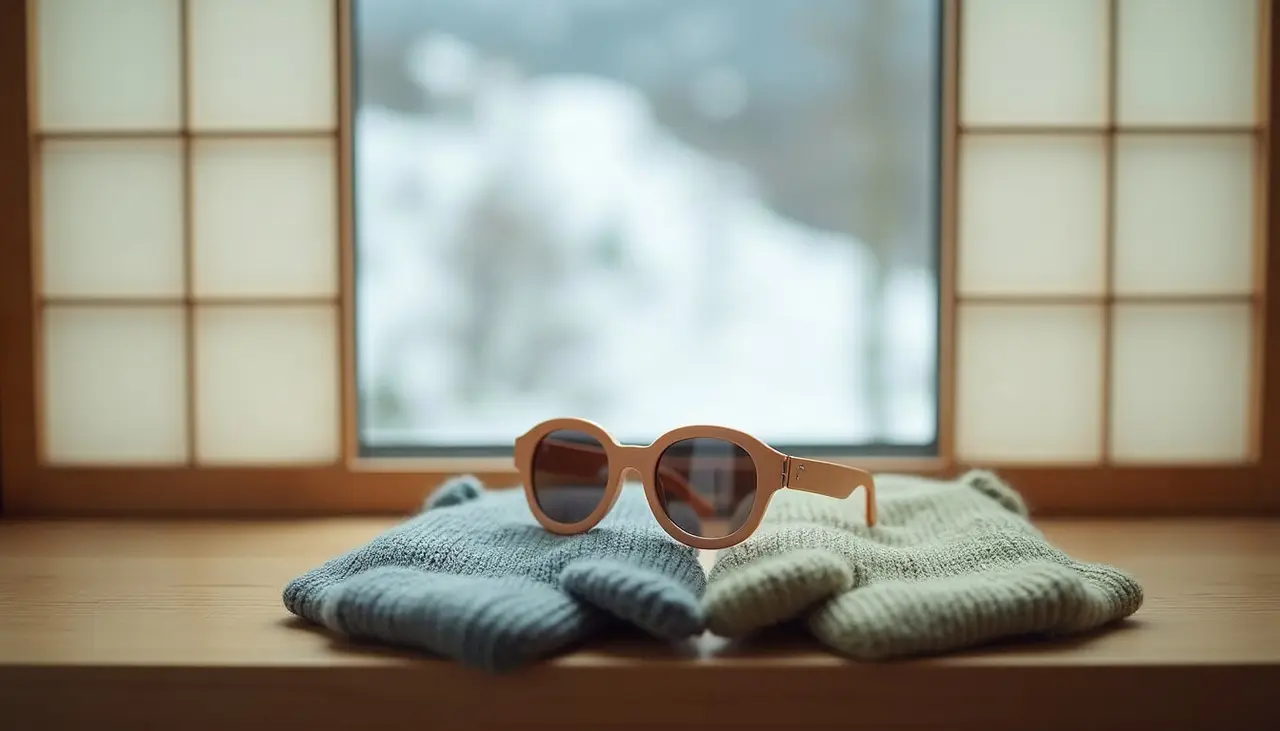
- Sunglasses or goggles labeled as blocking ultraviolet light, sized for a child's face
- A wraparound shape, or goggles, for snow play and skiing
- A strap or band, so they stay on when a child tumbles
- Wearing them on cloudy days too, because bright overcast light on snow can still be strong
Getting a child to keep them on is the real work. We made it a rule that sunglasses go on with the mittens, before the door opens, and come off only indoors. It took two winters to stick.
The evening: warm rooms and the ride home
The day ends where it began, with a ride, only now everyone is tired. After hours of bright light outdoors, children's eyes often feel heavy and a little sore, and a dim bus or a dark room can feel like a relief. This is a good moment to let them rest their eyes rather than reach for a screen straight away.
On the way home I keep the window curtain half drawn while the sun is still low, hand out water, and let the quiet happen. It is also the time I take a proper look at each child's eyes, in good light, for any redness that was not there in the morning. That small check is how I would catch the signs in the next section early.
When to see a doctor
Most tired or watering eyes after a mountain day settle with rest, warmth and sleep. One condition is worth knowing about. Too much sun reflecting off snow can cause a kind of sunburn of the eye's surface, often called snow blindness. The signs usually appear hours later, often in the evening: painful, gritty, red and watering eyes, and strong sensitivity to light. It generally needs a doctor's attention.
Take your child to a doctor, an eye doctor (an optometrist or an ophthalmologist, depending on where you live) or ask your pediatrician first, if you notice:
- eye pain, grittiness or redness after a day in the snow
- a child who cannot open their eyes in normal room light
- blurred vision that does not clear with blinking
- one red eye that does not settle by the next day
- a knock to the eye from a fall, a ski pole or a snowball
Decisions about care belong to you, your pediatrician and your child's eye doctor. I am a parent and a writer, not a doctor. If you are traveling, ask where the nearest place to get checked is before the trip, so you are not searching at night.
Almanac entry Season: midwinter, the weeks of school holidays and snow trips. What your eyes notice: squinting at bright white hillsides and rubbing tired eyes on the ride home. One thing to do: put sunglasses on with the mittens, before the door opens.
Before the next snow trip
On our last trip home my daughter fell asleep with her sunglasses pushed up on her hat, which I counted as a small victory. Her eyes were tired but not sore, and that is the most I ask of a long day in the snow. If you are planning a mountain trip with children this winter, pack for the light and the wind as carefully as for the cold. And if a child's eyes are painful or sensitive to light that evening, do not wait to see how they look in the morning; get them checked early.