A child's first showers and their eyes: soap, steam and glare in the family bathroom

Bath time in our apartment used to end the same way most nights: my son tipping his head back too late, a rinse of shampoo running into his eyes, and a short storm of tears on the bath mat. He is in primary school now and wants to shower on his own, which has turned our small bathroom into a place I look at differently. Families in the Arizona desert reading about a tub to shower conversion Scottsdale AZ are weighing the same switch many homes make as children grow, far from Kyoto.
A child's first showers bring the eyes into the picture: water and soap at face height, steam, shiny surfaces and the late-night walk to the toilet. Here is what a growing child's eyes meet in the family bathroom, and when a sore eye is worth a visit to the doctor.
The spray reaches a child's face first
In a bath, a child sits low and water comes from a cup or a hand. In a shower, water falls from above and runs straight down over the forehead. For an adult that is just a shower. For a seven-year-old who has not yet learned to tip their chin up and close their eyes, it means soapy water in the eyes more often than you might expect.
Shampoo and soap in the eye sting because they irritate the surface of the eye and the thin lining under the lids. It feels dramatic, but in most cases a rinse with clean, lukewarm water settles it within minutes. What helps most is not a special product but a few habits and a shower that suits the child using it.
A small family routine that worked for us:
- Before the water goes on, practice "chin up, eyes closed" as a game, so it is automatic when the shampoo comes out.
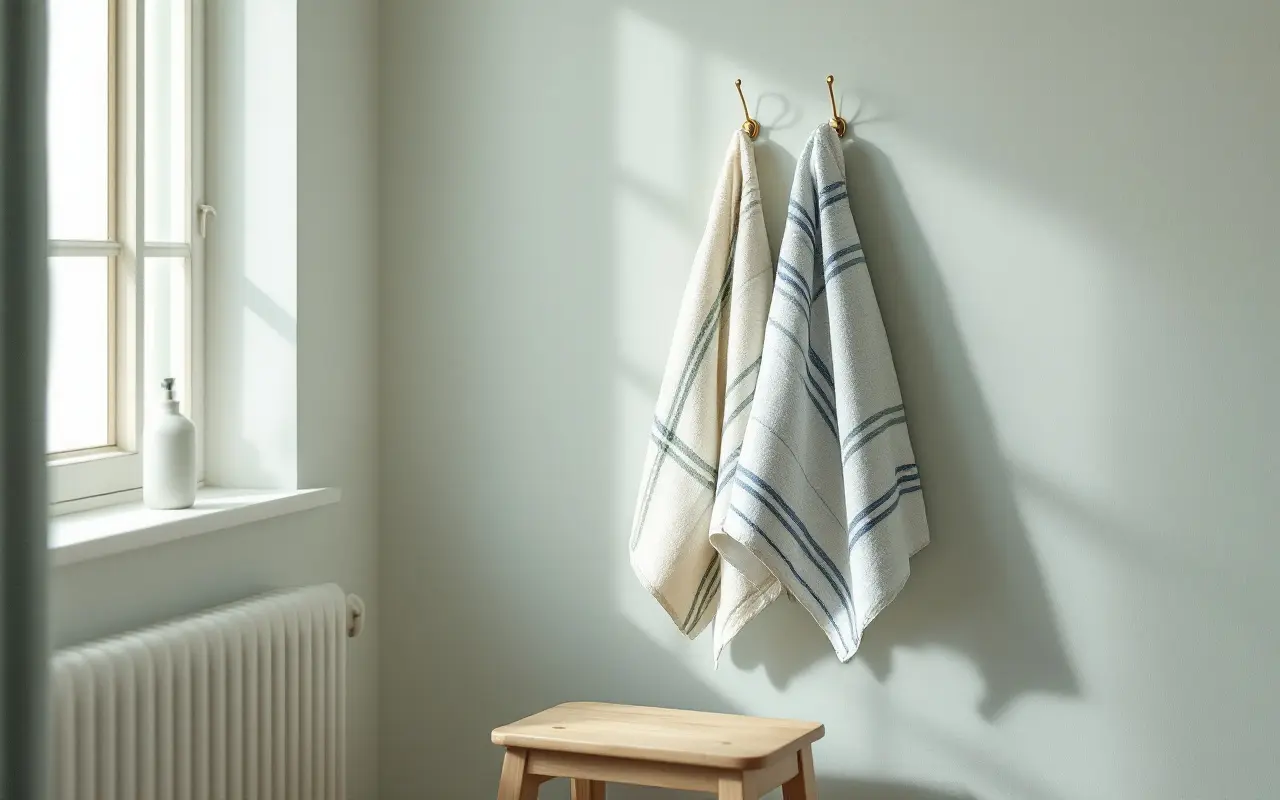
- Keep a dry hand towel within reach of the shower, at the child's height, so they can press it to their eyes instead of rubbing.
- Teach them to rinse their face under the spray with eyes closed, not to open their eyes to check.
- Stay nearby for the first weeks, even if you are only sitting outside the open door.
If you are planning a new shower, the details that matter for children are simple ones: a handheld sprayer or a spray head that can be angled, so water does not fall straight onto a small face, and a place to put the towel that a child can reach without stepping out onto a wet floor.
Steam and glare change what a child can see
A hot shower fills a small bathroom with steam in minutes. The mirror fogs, the light scatters, and the room becomes softly blurred. Children rarely mind, but it does make it harder for them to see the edge of the shower, the floor and the towel hook. For a child who wears glasses, it is worse: glasses come off for the shower, and the bathroom outside it is a blur until they are back on.
Then there is glare. Glossy white tiles and a bright overhead light make a bathroom look clean, but they also bounce light straight back into the eyes. A child stepping out of a dim hallway into that brightness at night will often squint or shield their eyes. Matte or softly textured surfaces and a light placed so it does not shine straight down into the eyes make the room calmer to be in.
In a dry climate, the change from a steamy bathroom to the rest of the house can be sharp. Children sometimes come out of a hot shower and rub their eyes as the air around them dries quickly. A good fan that clears the steam gently, and a towel for the face rather than the back of a hand, are the small fixes I would start with.
| Part of the bathroom | What a child's eyes meet | What tends to help |
|---|---|---|
| Shower walls and floor | Glossy surfaces that reflect light and look slippery | Matte finishes, a floor that contrasts with the walls |
| Overhead light | Bright glare when stepping in from a dark hallway | Softer, even light, a dimmer setting for night |
| Mirror | Fog after a shower, small children cannot see in it | Good ventilation, a stool so they can reach after it clears |
| Shower entry | A step or ledge that is hard to see in steam | A low or flat entry with a clear edge |
I am a parent, not a designer, so I would ask whoever is doing the work about these points rather than assume any of them. A good remodeler will talk you through what is possible in your particular room.
The night trip to the bathroom
In our home, the most important hour for the bathroom is not bath time at all. It is two in the morning, when a sleepy child gets up, shuffles down the hallway with half-closed eyes, and steps onto a cold floor. Eyes that have been in the dark take a while to adjust to light, and a sudden bright light is uncomfortable, so children often go in without turning the light on.
That is where a flat, clear shower entry, a mat that does not slide, and a low night light in the hallway make a difference. Contrast helps too: a towel rail, a shower edge and a toilet that stand out against the walls are easier for any tired eye to find. These are small things, and they help grandparents who stay over just as much as children.
Clean water and contact lenses for older children
Some families have a teenager who has just started wearing contact lenses, and the bathroom is where lens habits are formed. The general guidance from eye doctors is clear on one point: tap water and shower water should never touch contact lenses or the lens case. Lenses should come out before a shower, and the case should be cleaned only with the solution the eye doctor recommends.
It helps to give a lens-wearing teenager a clean, dry corner of the counter away from the sink splash, with good light so they can see what they are doing. If you are changing the bathroom anyway, a little more counter space and even light over the sink are worth thinking about.
When to see a doctor about sore eyes
Most soap or shampoo in the eyes settles quickly. Some signs mean you should not wait. Take your child to an eye doctor (an optometrist or an ophthalmologist, depending on where you live) or ask your pediatrician first if:
- the eye stays painful or red after a good rinse with clean water
- your child keeps saying something is in the eye, or will not open it
- a cleaning product, not just soap or shampoo, has splashed into the eye (rinse straight away, then get care the same day)
- vision seems blurred after the rinse and does not clear
- a teenager who wears contact lenses has a red, painful or light-sensitive eye
Your school nurse is also a good person to ask about anything you notice with your child's vision. These decisions belong to you, your child's doctor and your child's eye doctor.
Almanac entry Season: early spring, when the school year turns over and children start doing more on their own. What your eyes notice: a child rubbing their eyes and squinting after a first shower. One thing to do: practice "chin up, eyes closed" before the water goes on.
Before bath time comes around again
My son still gets shampoo in his eyes now and then, though less often, and he reaches for the towel instead of crying. Our bathroom is not new, but a softer light and a towel at his height have done more than I expected. If you are thinking about changing your own bathroom, ask about the light and the surfaces as well as the shower itself. And if a sore eye does not settle after a rinse, do not wait for morning to decide; a quick check with a doctor is always the calmer choice.