Vision, Glasses & Contacts · Eye Conditions
What happens if you sleep in contacts, and what to do next
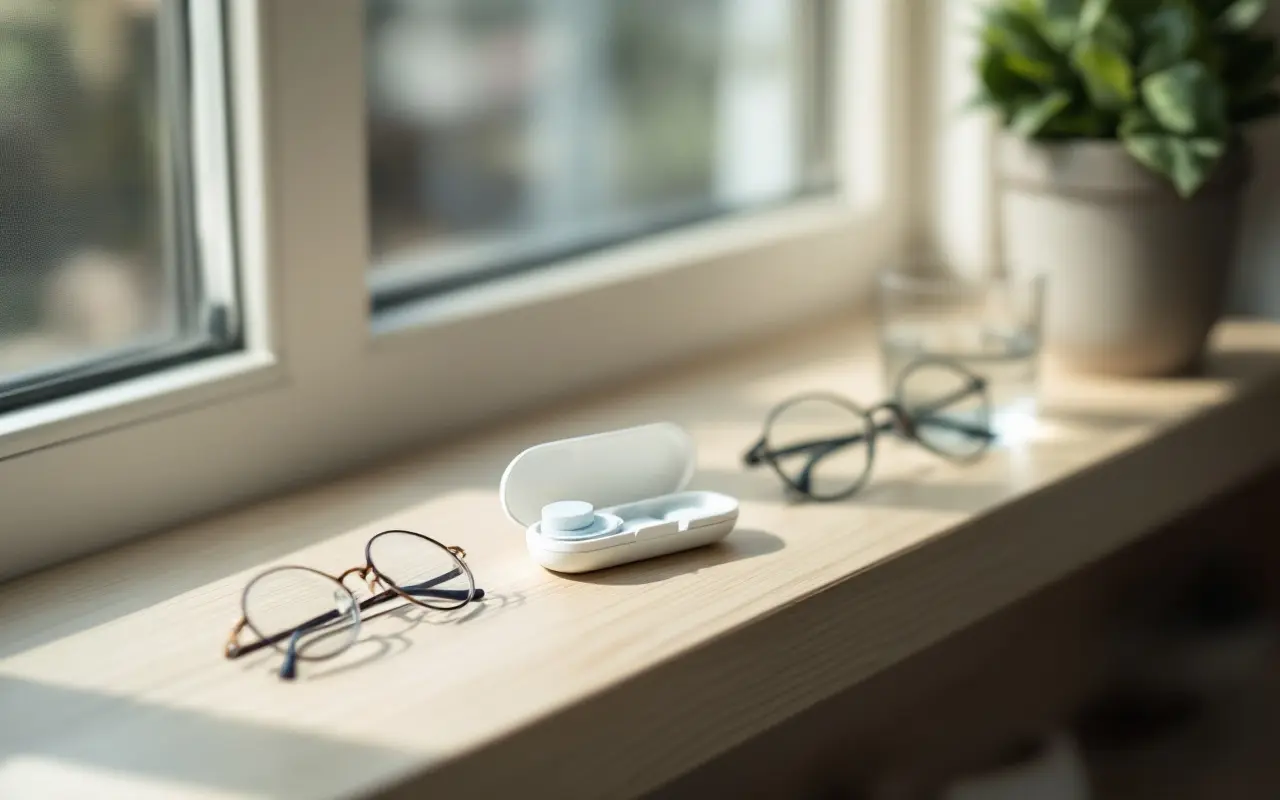
If you fall asleep in contact lenses that aren't made for overnight wear, the cornea (the clear front window of the eye) spends hours short of oxygen, with germs held against it. After a single night, the usual result is eyes that feel dry, scratchy or a little red, and lenses that seem stuck. The bigger concern is infection: studies suggest that people who sleep in their lenses have a risk of serious corneal infection several times higher than people who take them out every night.
One accidental night is rarely a disaster. But it is not harmless, and doing it often is one of the clearest ways to raise your risk. Below I go step by step through what happens overnight, what to do the morning after, and the warning signs that mean seeing an eye doctor the same day.
In all the contact lens guidance I have read over the years, one point never changes: unless your eye doctor has prescribed lenses for overnight wear, take them out before you sleep, and that includes naps.
What happens to the cornea while you sleep
The cornea has no blood vessels. That is part of what keeps it clear, but it means the cornea takes most of its oxygen straight from the air, dissolved in the tear film, while your eyes are open. When the eyelids close, that supply drops sharply, and the cornea makes do with the smaller amount that reaches it from blood vessels in the lining of the eyelid. Even without lenses it swells very slightly overnight, which is normal and clears soon after waking.
A lens adds another layer between the cornea and what little oxygen there is. Newer silicone hydrogel materials let through much more than older soft lenses, but a cornea under a lens and a closed eyelid for seven or eight hours is still working with less than it needs. It can swell more than usual, which is one reason vision may look misty after a night in lenses.
The second change is the loss of blinking. Each blink pumps a little fresh tear fluid under the lens and washes debris away. Asleep, that stops, and whatever is on the lens, from germs picked up on fingers or in the case to deposits from the day, sits pressed against the cornea for hours. Low oxygen also seems to weaken the cornea's outer layer, the eye's main barrier, making it easier for germs to take hold through a tiny break in the surface.
Over months or years, regular overnight wear can bring slower changes, such as fine new blood vessels growing in from the edge of the cornea, reaching for oxygen. These are often silent at first, one reason lens checkups matter even when your eyes feel fine.
Why infection is the main worry
An infection of the cornea is called keratitis. Infections linked to contact lenses are uncommon, and most lens wearers never have one, but they can be serious. Bacterial keratitis can get worse quickly, and a severe infection can leave a scar on the cornea that affects vision permanently. Rarer infections caused by fungi or by Acanthamoeba, an organism found in tap water, pools, lakes and soil, tend to develop more slowly and are often harder to treat.
When researchers look at who develops these infections, sleeping in lenses stands out again and again as one of the strongest risk factors. When higher-oxygen lens materials arrived, many hoped they would solve this. They did reduce the swelling and blood vessel problems, but studies suggest they did not remove the extra infection risk of sleeping in lenses. Oxygen is only part of the story; trapped germs and the lack of blinking matter too.
Showering before you take the lenses out adds water to the mix, so keep tap water, pools and hot tubs away from lenses and case. The column on contact lens care covers the daily routine.
Lenses that are made for overnight wear
Some lenses are approved for sleeping in. Certain soft lenses are approved for extended wear, meaning they can stay in through the night for a set number of nights. Orthokeratology, or ortho-k, uses rigid lenses worn only while you sleep to gently reshape the cornea, so that you can see without lenses during the day.
Both are medical decisions. An eye doctor checks whether your corneas and tears suit them, fits the lenses, tells you how many nights are allowed, and sees you for regular checkups. Even with an approved lens, overnight wear carries more risk than daily wear, so the same warning signs apply, and so does the rule for trouble: lens out, then see your eye doctor.
If you are not sure whether your lenses are approved for sleeping in, assume they are not and ask.
The morning after: what to do, step by step
If you wake up and realize your lenses are still in, there is no need to panic or rush.
1. Wash your hands, then let the lens loosen
A lens that has been in all night is often dry and clings to the eye, and pulling at it can scrape the surface. Wash and dry your hands, then blink several times and give it a few minutes; your own tears often loosen it. If your eye doctor has advised rewetting drops for your lenses, use them as directed. Then remove the lens gently in the usual way.
2. If you can't find the lens
A lens can slide up under the top eyelid. It cannot get lost behind the eye, because a thin membrane, the conjunctiva, folds back from the inside of the eyelid onto the eyeball and closes off the space. Look down in a mirror and gently lift the upper lid. If you still can't find or remove it, see an eye doctor rather than digging for it.
3. Throw away or set aside the lenses
Daily disposable lenses go straight in the trash. Reusable lenses need cleaning and disinfecting as usual before they go back in. If the eye feels irritated, set that pair aside in its case instead: if you end up seeing an eye doctor, they may want to look at the lenses and the case.
4. Wear glasses for the day
Give your corneas a lens-free day to recover, and don't put a fresh pair into an eye that is red, sore or blurry. Avoid drops meant to whiten red eyes, since they hide the very sign you need to watch. Leftover drops from an earlier eye problem, or someone else's prescription, are not a safe shortcut either.
5. Watch your eyes for a day or two
Check each eye in a mirror in good light, and cover one eye at a time to compare how clearly each sees something with fine detail, such as a calendar across the room. Mild dryness that fades over the morning is common. Anything in the list below is not.
When to see an eye doctor today
After a night or a long nap in lenses, take them out and see an eye doctor the same day if you notice any of these:
- Eye pain, or a feeling that something is stuck in the eye that doesn't ease once the lens is out
- Redness that doesn't settle after the lens is out, or that gets worse
- Sensitivity to light
- Blurred or hazy vision that doesn't clear when you blink
- Discharge, or much more watering than usual
- A white or grayish spot on the clear front of the eye, over the colored iris
These can be early signs of a corneal infection, and treatment works best when it starts early, so don't wait to see whether it settles overnight. Leave the lenses out, wear glasses, and take your lenses, case and lens details with you. Don't cover the eye with a patch unless an eye doctor tells you to.
Your first stop may be an optometrist or an ophthalmologist, a medical doctor who specializes in eye disease. Either can examine the cornea under magnification, and your eye doctor will decide on any treatment. The guide to finding an eye doctor explains your options, and eye trouble on holidays and long weekends covers what to do when clinics are closed.
If the pain is severe, your vision is dropping fast, or you can't reach eye care quickly, go to an emergency department. Sudden loss of vision in one eye is an emergency: call your local emergency number (such as 911, 999, 112, or 119 in Japan). Eye emergencies and first aid covers the first steps.
Habits that stop it happening again
Most nights in lenses happen because taking them out felt like one more job at the end of a long day. A few small changes make it the easy choice.
- On a late night, take your lenses out as soon as you get home, before you sit down. Keep a clean case with fresh solution by the sink, ready to use.
- Keep your glasses on the bedside table, so there is less reason to leave lenses in for one more episode or one more chapter.
- Have a backup pair of glasses in your current prescription. People whose only glasses are old and weak tend to stretch their lens hours.
- On overnight flights, night buses and long train journeys, keep glasses, a case and solution in your carry-on bag, and take your lenses out before you settle down to sleep.
- If falling asleep in lenses keeps happening, tell your eye doctor at your next checkup. They can look for oxygen-related changes and talk through whether a different lens type or schedule would suit your routine.
Questions people ask
Is a short nap in contacts OK?
It is better avoided. A brief nap is less exposure than a full night, but the lens can dry and stick, and short naps easily become long ones. On the last train back to Kyoto after an evening out, half the train car seems to be asleep. If you think you might doze off, take your lenses out first.
Why are my eyes red after sleeping in contacts?
Low oxygen and dryness overnight can irritate the eye and leave it pink, and this often eases over the morning once the lenses are out. Redness that lingers, or comes with pain, light sensitivity, blur or discharge, needs an eye doctor the same day, because it can be the start of an infection.
Are daily disposables safer to sleep in?
No. Daily disposable lenses are designed to be worn for one day and then thrown away. Sleeping in them brings the same low oxygen and trapped germs as any lens not approved for overnight wear, and a daily lens that has spent the night in your eye should never go back in.
Sources
- CDC contact lens health pages, including everyday care habits and the risks of sleeping in lenses
- American Academy of Ophthalmology patient information on contact lens safety