Choosing a glasses cleaner: spray, wipes, dish soap or ultrasonic
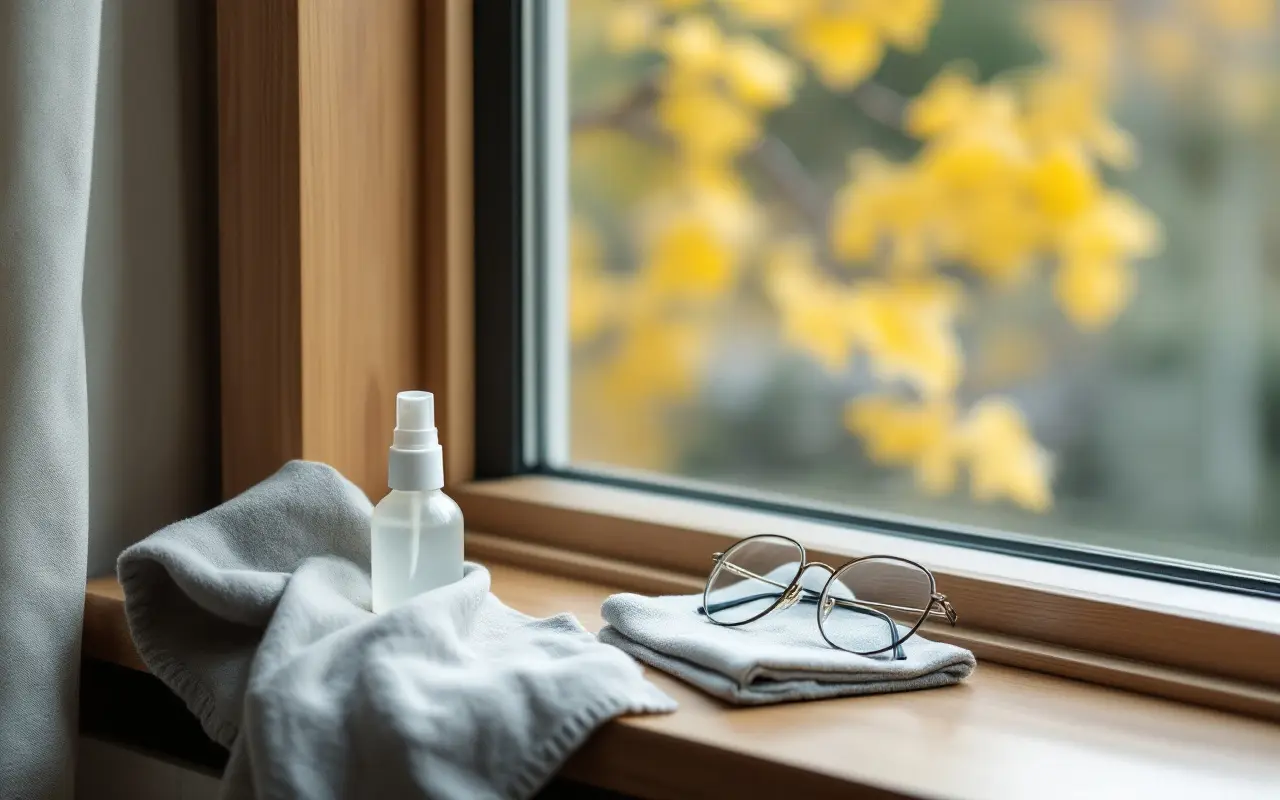
The glasses cleaner most people need is already at the kitchen sink: lukewarm water and one drop of plain dish soap without added lotion, dried with a clean microfiber cloth. Beyond that, a lens spray and cloth covers the desk and the car, wrapped wipes cover pockets and trips, anti-fog wipes help when a mask or cold air fogs your lenses, and a small ultrasonic cleaner takes care of grime in hinges and nose pads, if your optician agrees your pair can go in. Household glass cleaner isn't on the list: it is made for windows, not coated lenses.
When I worked in an optical shop, people often asked what they should buy to clean their glasses. This is the answer I gave, set out as a buying decision: the kinds of cleaner, who each one suits, and what to read on the label. The washing routine itself is in the guide to cleaning glasses without scratching, so I won't repeat it here.
What any glasses cleaner has to do
A glasses cleaner has three jobs.
It has to loosen skin oil, which is most of what you see as a smudge, mixed with sunscreen, makeup or cooking grease. Plain water slides over oil; a little detergent lifts it.
It has to keep grit from scratching the lens. Dust carries tiny hard particles, and wiping a dry lens drags them across it. Running water carries grit away; a generous spray at least lets the cloth glide over a wet surface. A wipe on a gritty lens can only push the grit around, which is why I think of wipes as a top-up rather than the main clean.
And it has to leave the coatings alone. Most lenses today are plastic with a hard coating on top, and many also carry an anti-reflective coating, a very thin layer that cuts reflections. You can't tell by looking which coatings yours have, and these layers are where harsh chemicals and heat do their damage. The shop that made your lenses can usually tell you what is on them.
The cloth is the other half of every cleaner except the ultrasonic tank. A microfiber cloth protects the lens only while it is clean; loaded with oil and grit, it spreads both.
Four kinds of glasses cleaner, side by side
These aren't ranked, because they do different jobs. Most people do well with the first one plus one or two of the others.
Dish soap and water at the sink
This is the everyday clean and the safest home option. The soap cuts oil gently, the running water takes grit away before anything touches the lens, and a full rinse leaves nothing behind. It suits everyone at home, and it is the right first step for lenses covered in sunscreen, sweat or kitchen splatter. Children's glasses that come home gritty from the park belong here too, not under a wipe.
Check the soap: plain, without added lotion or moisturizers, which leave a film that smears. The downside is that you need a sink and a minute, and a train has neither.
Lens cleaning spray with a microfiber cloth
A spray brings the sink's job, roughly, to wherever you are: a desk drawer, the glove box, a bag. It suits office workers, drivers and anyone who cleans their glasses several times a day away from water.
Read the label. You want a spray made for eyeglass lenses and described as safe for anti-reflective coatings, or for coated lenses. A screen or household spray isn't necessarily safe for lenses. If the lenses feel gritty, wait for a sink. And keep the cloth in your glasses case rather than loose in a bag, because a spray is only as good as the cloth that goes with it.
Pre-moistened lens wipes
Individually wrapped wipes give you a fresh, clean surface every time, with no cloth to forget or wash. They suit commuters, travelers, people who switch between bags, and anyone who keeps sunglasses in the car. Look for wipes described as suitable for anti-reflective coated lenses. The trade-offs: each wipe is used once and thrown away, and none of them can rinse off grit the way water does.
Anti-fog wipes are a related but different tool. They are made to cut fogging when you wear a mask, cook over a steaming pot, or step from a cold street into a warm shop or train, which is hard to avoid once Kyoto mornings turn cold in late autumn. If fog isn't your problem, ordinary lens wipes are enough.
A small ultrasonic cleaner
An ultrasonic cleaner is a small tank of water that vibrates at a very high frequency. The vibration forms countless tiny bubbles that collapse against every surface and knock dirt loose, including from places no cloth reaches: hinges, screw heads, the little arms that hold the nose pads, and the groove where the lens sits in the frame. Its real strength is the frame. You still finish the lenses with a clean cloth.
It suits metal frames with adjustable nose pads, where gray gunk builds up around the pad arms, and households with several pairs to look after. Clean pads grip better too, and if your glasses still slide afterward, the guide on keeping glasses from sliding down your nose covers what an optician can adjust.
It is not for every pair. Ask your optician before the first bath if your lenses are a few years old, if they have special coatings, or if you aren't sure what your frame is made of, because some coatings, frame materials and finishes don't suit it. Never put in lenses that are already crazed (covered in a fine web of cracks), chipped or peeling: the bath can't repair them and may loosen more of the coating. Follow the maker's instructions on the water and on anything you add to it.
Many optical shops will run your glasses through their own ultrasonic cleaner while you wait, which is a good way to see the difference and ask whether your pair suits a home unit.
Glass cleaner, vinegar and other things to keep off your lenses
Can you use glass cleaner on your glasses? No. Household glass and window cleaners are made for windows, which have no coating to protect. Many contain ammonia, which can strip or cloud lens coatings over time, even if the first few cleans look fine. The same goes for multi-surface sprays and kitchen cleaners.
The safe homemade glasses cleaner is the plain one: lotion-free dish soap and lukewarm water, with nothing to mix. Recipes that combine rubbing alcohol or vinegar with water are all over the internet, and I don't recommend them for coated lenses. You can't know how strong a home mix is or how your particular coating will take it, and vinegar is an acid. With the safe option already in your kitchen, there is nothing to gain from experimenting.
Also keep these away from lenses:
- Acetone and nail polish remover, which damage plastic lenses and many frames
- Paper towels, tissues, napkins and shirt tails, which are rougher than they feel and hold dust
- Toothpaste and baking soda "scratch removers", which are abrasive
- Hot water and the dishwasher, because heat can make a coating craze
What helps keep glasses clean at home and on the go
Start with the sink, then add the one or two items that match where you are when your glasses get smudged.
| Option | Who it suits |
|---|---|
| A drop of plain dish soap, lukewarm water and a clean microfiber cloth | Everyone, as the everyday clean at home |
| A lens cleaning spray and microfiber cloth kit | Desk workers, drivers and anyone with anti-reflective lenses who cleans away from a sink |
| Individually wrapped pre-moistened lens wipes | Commuters, travelers and people who would rather not carry a cloth |
| Individually wrapped anti-fog lens wipes | Mask wearers, cooks and cold-weather commuters whose lenses fog |
| A small ultrasonic cleaner with a stainless steel tank | Metal frames with grimy pads and hinges, once your optician says your pair suits it |
| A cleaning visit at an optical shop | Anyone curious about ultrasonic cleaning, and lenses that are older or showing wear |
To choose, think about where your glasses are when they get dirty. Mostly at home, the sink is enough, and a spare cloth is the only thing worth adding. At a desk or in the car, a lens spray with a microfiber cloth works well if it suits anti-reflective coatings, and a kit with two bottles lets one live at work and the other in the car. Out and about, pre-moistened, individually wrapped lens wipes made for coated lenses are easy to tuck into every bag. Anti-fog wipes come individually wrapped too, and many also clean the lens. For an ultrasonic cleaner, a stainless steel tank and a timer are worth having; check that your folded frame fits the tank, and ask your optician first. Avoid any spray or wipe that doesn't say it is made for eyeglass lenses, and anything containing ammonia.
When a cleaner isn't the answer: see an eye doctor
Sometimes the haze isn't on the glasses. After a proper wash, hold them up to a light. If the lenses look clear but your view through them is still blurry or foggy, your prescription may have changed, or something inside the eye may have, such as a cataract, a clouding of the eye's natural lens that often brings haze and glare. If the lenses themselves stay cloudy or crazed when clean, the coating is damaged and no cleaner will bring it back; ask an optician about new lenses. Scratches and smudges also make glare from headlights worse, one of the checks in the column on night driving in later life.
Book an eye exam with an optometrist or ophthalmologist if your vision stays blurry with freshly cleaned glasses, or if you get frequent headaches or eye strain. (An optometrist examines eyes and measures prescriptions; an ophthalmologist is a medical doctor who treats eye disease; an optician fits and adjusts glasses.) The guide to finding an eye doctor and planning a visit explains how to book, and afterward the glasses prescription reader explains each number on your new prescription.
Glasses cleaners are for glasses only. Never use a lens spray or wipe on contact lenses; they need the solution your eye care professional recommends, and the column on contact lens trouble and care covers the basics.
Get same-day eye care for new flashes of light, a sudden shower of floaters, or a shadow or curtain across part of your vision.
Go to an emergency department, or call your local emergency number (such as 911, 999, 112, or 119 in Japan), for:
- A cleaning spray or liquid splashed in the eye: don't rub, rinse at once with plenty of clean water for at least 15 minutes, then get urgent care
- A broken lens with a fragment in or near the eye: don't rub it or try to remove anything yourself
- Sudden loss of vision in one eye, even if it returns within minutes, which can be a warning sign of stroke
- Severe eye pain with blurred vision, especially with halos around lights, headache or nausea
Eye emergencies and first aid explains what to do while you get help.
Questions people ask
Can I use glass cleaner on my glasses?
No. Household glass cleaners are made for windows, not coated lenses, and many contain ammonia, which can strip or cloud anti-reflective and other coatings over time. Use a drop of plain dish soap and water, or a spray labeled for eyeglass lenses.
What is a safe homemade glasses cleaner?
A drop of plain, lotion-free dish soap in lukewarm water, with nothing to mix. I don't recommend homemade sprays made with alcohol or vinegar for coated lenses, because there is no way to know how a particular coating will react.
Are ultrasonic cleaners safe for glasses?
For many frames, yes, and they are very good at clearing hinges and nose pads. They don't suit every coating or frame material, so ask your optician before the first use, and never put in lenses that are crazed, chipped or peeling.
Should I get lens spray or lens wipes?
It depends on where you clean. A spray with a cloth suits a desk or a car, where you clean often and can keep the cloth in a case. Wrapped wipes are easier to carry and give you a fresh surface each time. Both work best on lenses already free of grit.