Eyes in Later Life · Health & Living
Gifts for someone with poor eyesight, chosen with care

The most useful gifts for someone with poor eyesight make everyday things a little easier without making a point of it. Good light for a favorite chair, a magnifier for the kitchen or a pocket, spare reading glasses in the strength they already use, large-print books or audiobooks, and an hour spent making the text bigger on their phone are all practical and kind. The most valuable gift of all costs very little: a ride to an eye appointment, and your company while they are there.
The weeks from late November to the new year are a season of giving in many places. In Japan, year-end oseibo gifts go to people who have looked after you; elsewhere it is the holidays. People my age receive a fair number of presents in these weeks, and the ones that get used are the ones that fit how we actually live. Here is how to find those, with some tact, and what to leave on the shelf.
Ask first, and keep it light
A present that seems to announce "your eyes are going" can sting, especially from a grown child to a parent. So start with a conversation, not a shopping list. Ask what has become a nuisance lately, and listen for the details: the print on medicine boxes, the TV guide, recipe cards, the bus timetable, threading a needle, the buttons on the microwave. Those details tell you far more than "my eyes aren't what they were".
Keep the framing about comfort rather than decline. Everyone needs more light as they get older; that is ordinary aging, not a verdict. "Your reading lamp looks a bit dim" lands better than "you can't see properly anymore". If you are not sure what they would like, offer two ideas and let them choose, or choose together.
It also helps to know when they last had an eye exam, because some gifts, reading glasses in particular, depend on it. And if they mention a change that came on suddenly, or affects one eye, that is not a gift question at all. It needs an eye doctor soon, and the warning signs section below says how soon.
The gift of time: getting to an eye appointment
Of everything here, this is the one I would most like to receive, and the one most likely to make a real difference. Many older people put off eye checks not because they don't care but because getting there is hard. Dilating drops mean no driving home afterward, as the article on how long eye dilation lasts explains. Winter evenings bring glare from oncoming headlights, which the piece on night driving goes into. And the clinic may be across town.
A handwritten card that says "I will drive you to your eye appointment, and lunch afterward is on me" is a fine present. You can go further if they would like: help find and book the appointment, write down the questions they want to ask and the medicines they take, and sit in to take notes if they want you there. Finding an eye doctor and planning a visit sets out the steps.
A full exam can catch problems that cause no symptoms early on, such as glaucoma and diabetic eye disease, and it sorts out whether trouble with small print is simple presbyopia or something else, such as a cataract or macular degeneration. For people over 65, eye doctors commonly suggest an exam every year or two, and people with diabetes are usually advised to have a dilated exam at least once a year.
Light, magnifiers and spare readers
Good light
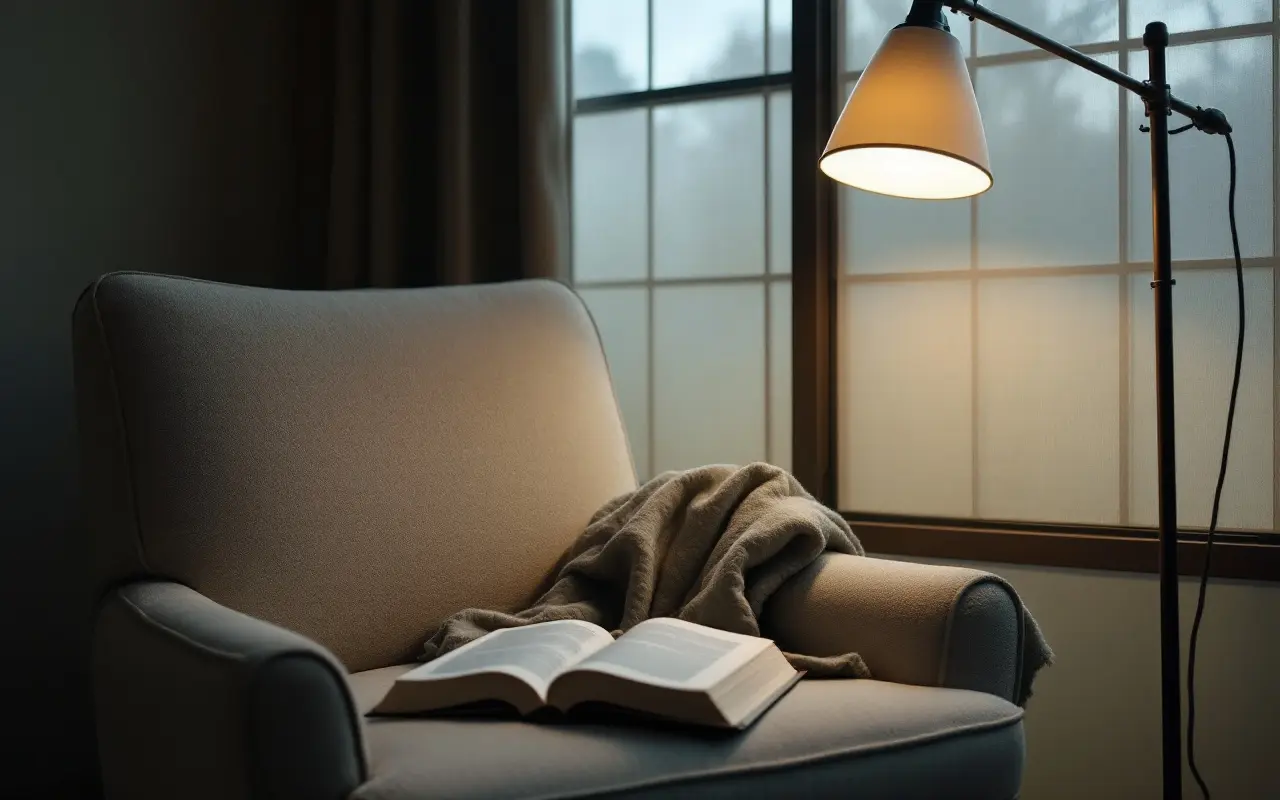
A lamp for the reading chair is a modest gift that helps nearly everyone over 50. Older eyes need much more light than younger ones, and it works best placed to the side and below eye level, so it falls on the page rather than into the eyes. The guide to magnifiers and lighting for small print explains where to put it. A dimmable lamp lets the person set the brightness themselves, which matters because people differ widely in how much light feels comfortable and how much feels like glare.
Magnifiers for home and pocket
A large hand magnifier with its own light suits the kitchen table: bills, labels, the cooking time on a package. A small slide-out pocket magnifier goes out with them to restaurants, shops and the pharmacy counter. One of each covers most days.
Resist the idea that stronger is kinder. The stronger the magnifier, the fewer words it shows at once and the closer it has to be held, so a very strong one can be harder to use for ordinary print. If someone needs strong magnification just to read normal print, that points to an eye exam, and perhaps a low vision referral, rather than a stronger gadget.
Spare readers, once the strength is known
Reading glasses get left everywhere, and a few spare pairs for the kitchen, the bedside and a coat pocket make a genuinely useful present. The catch is the strength. Buy them only when you know the strength the person already uses comfortably, from their current pair or their eye exam. The reading glasses strength tool shows typical starting strengths by age, but that is for the person to try, not for you to guess with. Ready-made readers also don't suit everyone, for example people whose two eyes need different powers.
Books, sound and bigger buttons
Plenty of good gifts have nothing to do with lenses.
- Large-print books. Many popular titles come in large-print editions, and libraries often have a large-print section. A large-print edition of an author they already like is a safe choice.
- Audiobooks and radio. A set of audiobooks, or help setting up a library's audiobook service on their phone or tablet. Many countries also have talking-book services for people with sight loss, often free.
- Bigger buttons and clearer displays. Phones, TV remotes, clocks and kitchen timers come in versions with large buttons or large, high-contrast numbers. A clock showing the day and date in big figures suits many people.
- Paper that is easier to see. Notepads with bold lines, felt-tip pens that leave a darker line than a ballpoint, a large-print calendar or address book, large-print puzzle books and playing cards with big numbers.
Setting up a phone together
An hour of your time with their phone can do more than most things in a shop. Sit side by side and let them hold it. Turn the text size up a step or two, try bold text, switch on the larger display setting, and show them the built-in magnifier that many phones have, which uses the camera. If typing is hard, set up voice dictation for messages.
Change one or two things at a time, and write the steps on a card in large, dark letters so they can find their way back later. The guide to low vision support lists more of the accessibility features on phones and tablets.
What helps: matching the gift to the person
Think about what the person does every day and what has become fiddly, then pick one or two of these. The first two cost little more than your time.
| Option | Who it suits |
|---|---|
| A ride to the eye doctor, and lunch after | Anyone who hasn't had an eye exam in a while, or can't drive home after dilating drops |
| An hour setting up bigger text on their phone | People who use a phone every day and hold it at arm's length |
| A dimmable LED desk lamp for the reading chair | Readers, knitters and puzzle fans who sit in the same spot each evening |
| A large lighted hand magnifier | Someone who struggles with labels, dials, bills and instructions at home |
| A pocket LED magnifier | People who eat out, shop or travel and find menus and price tags hard |
| Spare readers in the strength they already use | People who keep losing their one pair, once their strength is known |
| Large-print books, audiobooks or a talking-book service | Keen readers who find print tiring by evening |
To choose, start from the task, not the eyes. Someone who reads in one chair every night will get more from a lamp than from a magnifier, while someone who is out and about and squints at menus will use a pocket magnifier more. Simple beats clever: a gadget with many buttons and modes can end up in a drawer. Include a gift receipt so it can be swapped without awkwardness. And none of these is a substitute for an eye exam.
What not to buy
Some gifts sound helpful but are best left alone.
- Supplements sold as good for eyesight. For most people there is no good evidence that they improve sight. For one group, people with certain stages of age-related macular degeneration, eye doctors sometimes recommend a specific supplement formula, and that is a decision for their own eye doctor, not a present.
- Blue-light glasses. The evidence so far does not show that they reduce eye strain from screens or protect the eyes, and they do nothing for small print.
- Strong reading glasses bought on a guess. A pair that is too strong pulls the focus in close and can feel uncomfortable, and ready-made readers don't suit people whose eyes differ.
- Anything that comes with a lecture. A gift is not the place to say they should have had their eyes checked years ago.
When a gift isn't the answer
Some changes need an eye doctor, not a present.
- Help them book an appointment soon if reading has become much harder over a few months, if glasses don't seem to help, if glare is spoiling outings, or if straight lines have started to look wavy. The column on AMD and the Amsler grid explains a simple home check for that last one.
- They should see an eye doctor the same day for a sudden change in vision, especially in one eye, a dark or missing patch in the center of what they look at, new flashes of light, a sudden shower of floaters, or a shadow like a curtain across part of their vision.
- Call your local emergency number (such as 911, 999, 112, or 119 in Japan), or go to an emergency department, for sudden loss of vision in one eye, even if it returns within minutes, since it can be a warning sign of stroke. The same goes for severe eye pain with blurred vision, halos around lights, headache or nausea. Eye emergencies and first aid covers what to do while help is on the way.
If their eye condition is being treated and glasses and a magnifier are no longer enough, the most useful thing you can offer is encouragement to ask their eye doctor about low vision services. These match magnifiers, lighting and devices to the person's eyes and goals, and usually let them try before deciding. The low vision guide explains what they offer, and the American Foundation for the Blind has practical advice for families.
Questions people ask
What do you buy an elderly parent whose eyesight is getting worse?
Ask what has become hard, then match the gift to that task: a good lamp for reading, a lighted magnifier for labels at home, or a pocket one for going out. Many parents value help most, such as a ride to an eye appointment or an hour setting up their phone. If their sight is changing quickly, help them see an eye doctor first.
Are large-print books a good gift?
For keen readers, often yes, especially by an author they already enjoy. Some people prefer audiobooks once reading tires them, so ask which they would rather have.
Should I buy reading glasses as a gift?
Only if you know the strength they already use comfortably. A spare set in their current strength is a safe gift; a guess is not, and readers don't suit eyes that differ from each other.
How do I suggest an eye exam without upsetting them?
Make it practical and shared. An offer to drive them and have lunch together, or to book your own check at the same place, usually goes down better than a warning. Keep it about their independence, not about what they can no longer do.