The kitchen counter and older eyes: light, color and a tiled wall, and when to get them checked
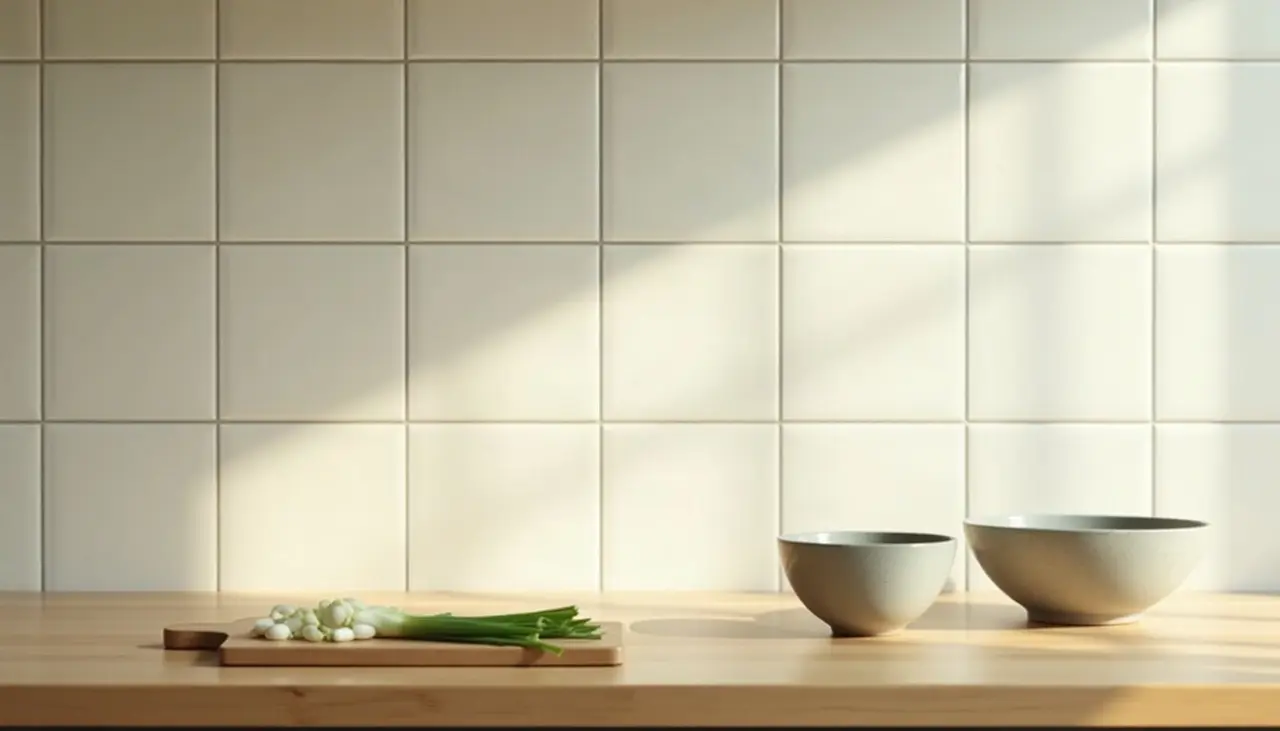
Over tea last winter, three of us who used to share a newsroom got onto the subject of kitchens. One had just redone hers, and what she talked about was the wall behind the stove: the new glazed tile seemed to hold the morning light, and for the first time in years she could see what she was chopping without leaning in. If you are planning a new wall like that, the light-catching handmade backsplashes zellige tile makers are known for are one choice worth a look.
I am not a doctor but a retired reporter, and I have learned that the kitchen is where older eyes work hardest: small print on packets, sharp knives, steam, hot oil and the edge of a counter at hip height. This column is about thinking through the light, the color and the work itself with your eyes, or a parent's eyes, in mind.
The light on the counter is the first thing to get right
Most kitchens are lit from the middle of the ceiling. That puts your own head and shoulders between the lamp and the cutting board, so the place where you need the most light gets a shadow instead. Younger eyes shrug this off. Older eyes, which generally need more light to see the same detail, do not, and the shadow is where a knife slips.
The usual fix is light under the wall cabinets, aimed down onto the counter. Here the wall behind the counter starts to matter, because that light lands on it and bounces back toward you. A pale, glazed wall spreads light across the whole work surface. A dark, flat wall drinks it up.
Glazed handmade tile behaves differently from a sheet of shiny plastic or a mirror-smooth factory tile. Each piece has a slightly uneven face, so instead of one bright stripe reflecting straight into your eyes, the light breaks into many small soft highlights. That is the quality my friend was describing. It is also a reason to think about where the lamps sit before the tile goes up.
A few things I would check with whoever is planning the kitchen:
- Put the under-cabinet light toward the front edge of the cabinet, pointing back at the wall and down, so you see the lit surface and not the bulb.
- Choose a warm, even light rather than a cold, harsh one. Many older people find a warmer light easier to live with in the evening.
- Ask for the counter light on its own switch, so it can be used for work without flooding the whole room.
- Stand at the sink and at the stove at the height you actually stand, and look at the wall. If you see a hard bright spot, move the lamp, not your head.
In an old Kyoto house the daidokoro, the kitchen, was often a narrow room at the back with one window. Our kitchens are brighter now, but the rule holds anywhere: light the task, not just the room.
Color and contrast help eyes find the edges
The second thing older eyes notice is that edges begin to blur into each other. A white counter against a white wall against a white cabinet can look like one surface by evening. The eye's ability to tell one shade from a close neighbor, what eye doctors call contrast sensitivity, tends to fade with age, and that is when people start reaching for the edge of the counter and missing it.
This is where the color of a tiled wall earns its keep. Here is how I would think about the main choices, without pretending any one is right for everyone:
| Wall color | Where it suits | What to watch |
|---|---|---|
| White or warm white | Small or dim kitchens that need light spread around | Pair it with a counter of a clearly different shade so the edge stands out |
| Cream or beige | Kitchens with wood or stone counters, a softer look by lamplight | Close in tone to many counters, so check the contrast in evening light |
| Green or blue | A counter that is pale, where you want the wall to read as a clear backdrop | Darker shades reflect less light, so the counter lamps need to be generous |
| Black or deep brown | Large, bright kitchens with plenty of daylight | Takes in a lot of light; small items on a dark counter in front of it can get lost |
The idea is simple. The counter, the wall and the front edge of the counter should each read as a different thing at a glance. If you are setting up a kitchen for a parent whose sight is changing, ask them to stand in the room in the evening and point to the edge of the counter. If they hesitate, the contrast needs work.
Handmade tile has one more quality here. Because each piece varies a little in shade, a tiled wall has a gentle texture to it, and some people find that a textured background makes a white plate or a glass on the counter easier to pick out than a perfectly flat one. I have no figures on this; look at it in person before you decide.
Splashes and steam come with cooking
The kitchen is one of the few rooms where things fly toward your face: hot oil from a pan, a spit of boiling water, the spray from a tap turned on too hard, the cloud of steam when the rice cooker lid comes off. A backsplash protects the wall, but it is worth thinking about your eyes in the same breath.
A short routine at the stove
- Keep the lid nearby and put it on when the oil starts to spit.
- Turn your face aside when you lift a lid or pour from a hot pot, so the steam goes past you.
- Keep cleaning sprays below face height and point the nozzle at the wall, never toward you.
- If you wear glasses, keep them on while cooking. They are not safety glasses, but they do stop some of the spatter.
A glazed tile wall wipes clean easily, which means you can keep the area behind the stove clear of grease without strong cleaners. That matters for eyes too. The less harsh spray used at face height, the less chance of a splash where you do not want it. Ask whoever supplies or fits the tile how they suggest cleaning it, and follow that.
The work itself puts dust in the air
A new backsplash is a small job compared with a whole kitchen, but cutting and fitting tile throws fine dust and small chips, and older walls give up plaster dust when the old surface comes off. This is work for a tile setter or a contractor, and a good one will cut tile outside or in a separate area, keep the dust off the rest of the house and wear eye protection while doing it.
If you or a parent are living in the house during the work, a few plain habits help:
- Stay out of the kitchen while cutting is going on, and keep the door closed if there is one.
- Cover food, dishes and the rice cooker, and wipe the counter with a damp cloth before cooking again.
- Do not rub your eyes after touching dusty surfaces. Wash your hands first.
- If you wear contact lenses, consider glasses for the days of dusty work.
When to see an eye doctor
None of this replaces an eye exam. If you find you need more light every year to see the same things, that is worth mentioning at your next appointment, and if you have not had one in a while, it is a reason to book.
See an eye doctor promptly, an optometrist or an ophthalmologist depending on where you live, if you notice:
- New or worsening blur, especially if it came on quickly.
- Haloes around lights, or glare that suddenly seems much worse than it used to.
- Trouble seeing at night or in dim rooms that is new to you.
- After a splash of hot liquid, oil or a cleaning product: rinse the eye with plenty of clean water and get care the same day.
- A scratchy, something-in-the-eye feeling after dusty work that does not settle, or any pain or redness.
What to do about any of these belongs to you and your eye doctor. A family member can help by noticing changes, like a parent who has stopped cooking in the evening, and by going along to the appointment if asked.
Almanac entry Season: midwinter, when the light fades by late afternoon and dinner is cooked under lamps. What your eyes notice: the counter seems darker than it did in summer, and edges are harder to find. One thing to do: stand at the counter after dark and look for shadows on the cutting board; light that spot first.
One last look around the kitchen
I think often about my friend's remark that she could see what she was chopping without leaning in. It is a small thing, and it is the whole point: a kitchen that gives older eyes enough light, a clear edge and a clean wall is one they can keep working in for years. If something about your sight changes along the way, in the kitchen or anywhere else, see an eye doctor early rather than waiting to see whether it passes.